| Journal of Food Bioactives, ISSN 2637-8752 print, 2637-8779 online |
| Journal website www.isnff-jfb.com |
Original Research
Volume 35, September 2026, pages 69-80
Effects of tamarind seed husk extract on abdominal visceral fat: a randomized, double-blind, placebo-controlled trial in Japanese adults with mild obesity
Hiroaki Yamadaa, Yusuke Yamashitaa, Xuan Lia, Kenji Satoa, Saki Shirakoa, Mariko Hiratab, Jun Kawamurab, Yumeo Suzukib, Yoshito Tsuruhab, Tsuyoshi Takarac, Young-il Kima, *
aResearch & Development Division, Pharma Foods International Co., Ltd., 1-49 Goryo Ohara, Nishikyo-ku, Kyoto 615-8245, Japan
bMP GOKYO FOOD & CHEMICAL Co., Ltd., 20F HERBIS OSAKA, 2-5-25 Umeda, Kita-ku, Osaka 530-0001, Japan
cTakara Clinic Medical Corporation Seishinkai, 9F Taisei Building, 2-3-2 Higashi-Gotanda, Shinagawa-ku, Tokyo 141-0022, Japan
*Corresponding author: Young-il Kim, Research & Development Division, Pharma Foods International Co., Ltd., 1-49 Goryo Ohara, Nishikyo-ku, Kyoto 615-8245, Japan. E-mail: youngil-kim@pharmafoods.co.jp
DOI: 10.26599/JFB.2026.95035457
Received: July 27, 2026
Revised received & accepted: September 10, 2026
| Abstract | ▴Top |
Tamarind seed husk, a by-product of gum production, is rich in polyphenols. We examined whether tamarind seed husk extract (TSHE) reduces abdominal visceral fat area (AVFA) in Japanese adults with mild obesity. In a randomized, double-blind, placebo-controlled trial (UMIN000057223), 112 adults (25 ≤ BMI < 30 kg/m2) received TSHE (200 mg/day) or placebo for 12 weeks. AVFA at week 12, the primary outcome, was lower but not significantly (p = 0.077). AVFA was already significantly lower at week 4, and the percent reduction in total fat area was significant at weeks 8 and 12. Reductions were greater in participants with a baseline visceral-to-subcutaneous fat ratio ≥ 0.4. No adverse events occurred, indicating that TSHE is safe as a food ingredient. This is the first clinical trial to show that TSHE (200 mg/day) reduces visceral fat in mildly obese adults with a visceral-to-subcutaneous fat ratio ≥ 0.4.
Keywords: Tamarind seed husk; Procyanidin; Visceral fat; Randomized controlled trial; Polyphenol
| 1. Introduction | ▴Top |
Obesity is a major risk factor for lifestyle-related diseases such as dyslipidemia and diabetes, representing a significant public health concern. In Japan, obesity is defined as a body mass index (BMI) ≥ 25 kg/m2 (Examination Committee of Criteria for Obesity Disease in Japan, 2002; Japan Society for the Study of Obesity, 2022), and a BMI of 25 to less than 30 kg/m2 is classified as mild obesity (class 1 obesity). According to the 2023 National Health and Nutrition Survey, approximately one in four Japanese adults falls into mild obesity, representing an estimated 27 million individuals with obesity and 13 million with suspected diabetes (Ministry of Health, Labour and Welfare of Japan, 2025). These figures highlight an urgent need for strategies to prevent the onset and progression of these conditions. Although East Asians have lower obesity rates than Western populations, they are more susceptible to metabolic disorders. Consequently, even individuals with mild obesity exhibit elevated risk (Kuwabara et al., 2018). This disparity is attributed to a higher proportion of abdominal visceral fat (AVF) in East Asians at an equivalent BMI (Zenas-Trujillo et al., 2023).
In Japan, a GLP-1 receptor agonist is approved for obesity only in patients with hypertension, dyslipidemia or type 2 diabetes who have a BMI of ≥ 27 kg/m2 with two or more obesity-related disorders, or ≥ 35 kg/m2, and only after six months of supervised diet and exercise therapy has failed; use is restricted to certified institutions and to 68 weeks (Ministry of Health, Labour and Welfare of Japan, 2023). Gastrointestinal adverse events are common: in the Japanese and Korean phase III trial, constipation, nausea, diarrhea and vomiting occurred in 26.1%, 17.6%, 16.1% and 8.5% of participants given 2.4 mg, versus 3.0%, 4.0%, 5.9% and 2.0% on placebo (Ministry of Health, Labour and Welfare of Japan, 2023). Therefore, in Japan, there is a need for functional food ingredients that are safe for daily use and target reduction of AVF, particularly in individuals with mild obesity and elevated AVF.
Current approaches to reducing AVF through functional foods include a range of bioactive compounds, such as tea catechins (Nagao et al., 2001; Zhang et al., 2012), apple polyphenols (Akazome et al., 2010), and 3-(4-hydroxy-3-methoxyphenyl)propionic acid (HMPA) derived from fermented rice bran (Yoshino et al., 2022). Although these options are safe for daily consumption, obtaining these components through complex production methods or specialized cultivation often leads to high costs and environmental burdens.
Tamarind (Tamarindus indica L.) is a large tropical leguminous tree that can reach a height of up to 30 m (Nasir et al., 2026). It is characterized by remarkable longevity and is widely cultivated across Africa and Asia (Nasir et al., 2026). Furthermore, it exhibits environmental adaptability due to its nitrogen-fixing capability through symbiosis with rhizobia and a hard outer seed husk that protects the interior of the seed (Nasir et al., 2026). The seeds serve as a vital industrial resource, providing tamarind seed gum, which is utilized as a thickening and stabilizing agent (Nasir et al., 2026). During gum production, the seed husk is generated as a by-product in quantities estimated at 30,000 tons annually, most of which is currently discarded (Crispín-Isidro et al., 2019). Although treated as underutilized biomass, tamarind seed husk is rich in bioactive compounds, particularly polyphenols such as catechins and procyanidins (Wandee et al., 2022). Tamarind seed husk polyphenols have been reported to inhibit adipocyte differentiation and lipid accumulation in cultured adipocytes (Wandee et al., 2022). In addition, a tamarind seed coat extract inhibits pancreatic lipase activity in vitro and suppresses triglyceride absorption in rats, indicating a capacity to limit dietary lipid digestion and absorption (Souza et al., 2025). In a rat model of non-alcoholic fatty liver disease (NAFLD), tamarind seed coat extract reduced hepatic lipid accumulation and also lowered body weight (Sasidharan et al., 2014). However, its specific effects on the reduction of AVF particularly in humans have not yet been evaluated. Therefore, we conducted a randomized, double-blind, placebo-controlled trial to evaluate the effects of tamarind seed husk extract (TSHE) on the reduction of AVF in individuals with mild obesity. We hypothesized that a 12-week TSHE intake would reduce AVF compared with placebo.
| 2. Materials and methods | ▴Top |
2.1. Nutritional composition and polyphenol content of TSHE
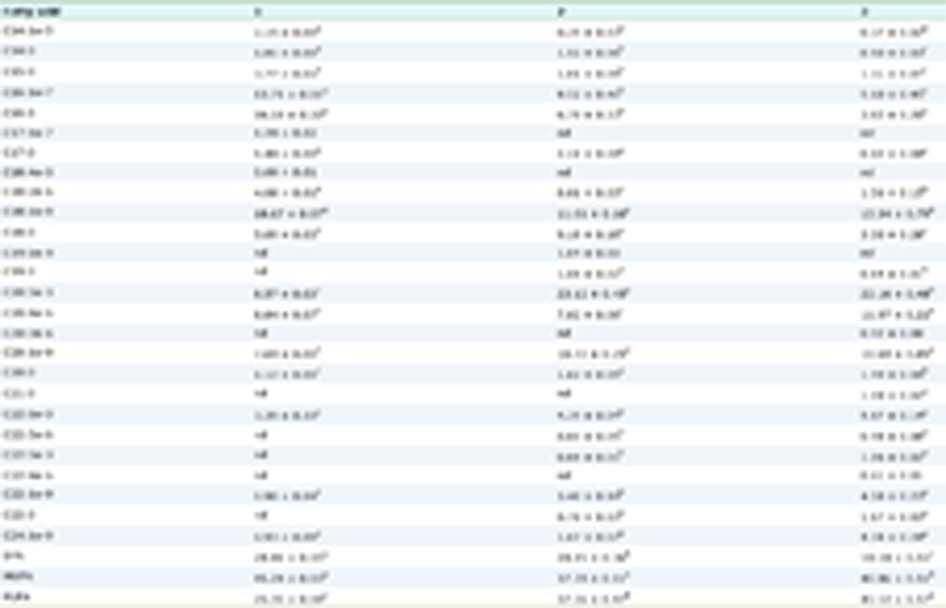
The TSHE used in the present study was a powdered extract prepared from tamarind seed husk by extraction with food-grade aqueous ethanol (the exact extraction parameters are proprietary) at a food processing facility of Pharma Foods International (Kyoto, Japan). The nutritional composition of TSHE—including moisture, crude protein, crude fat, ash, and crude carbohydrate—was analyzed by the Japan Food Research Laboratories (Tokyo, Japan). The composition of TSHE and of the test food is given in Table 1.
 Click to view | Table 1. Composition of TSHE and of the test food |
2.2. Polyphenol analysis of TSHE and the test food
To analyze the polymerized procyanidins that comprise the principal constituents of TSHE, thiolytic degradation of polymerized procyanidins in TSHE was performed prior to high-performance liquid chromatography (HPLC) analysis. Thiolytic degradation of authentic procyanidin B2 (Tokyo Chemical Industry, Tokyo, Japan) was also performed. Ethanol (analytical grade or higher), hydrochloric acid (35.0–37.0%, analytical grade or higher), and 2-mercaptoethanol (molecular biology grade) were purchased from FUJIFILM Wako Pure Chemical (Osaka, Japan). For sample preparation, five TSHE capsules and five placebo capsules were opened, and 400 mg of the collected powder from each group was dissolved in 20 mL of water. Separately, 200 mg of TSHE bulk powder was dissolved in 20 mL of water to serve as the raw material standard. Reference standard solutions of procyanidin B2 and epicatechin were prepared in water at approximately 1 mg/mL. The thiolysis reagent was prepared by mixing 1,250 µL of ethanol, 1.5 µL of hydrochloric acid (∼12.0 mol/L), and 75 µL of 2-mercaptoethanol per sample. Then, 1,325 µL of this reagent was mixed with 675 µL of each sample solution or procyanidin B2 and incubated at 70°C for 7 h under continuous stirring. After incubation, the mixtures were filtered through No. 2 filter paper (Toyo Roshi Kaisha, Tokyo, Japan) prior to analysis.
Compounds with low molecular weight were detected by ESI-MS using an LCMS-8040 mass spectrometer (Shimadzu) operating in negative ion and full scan modes. Mass spectra were acquired for a scan range up to mass-to-charge ratio (m/z) of 2,000. Chromatographic separation was performed using a Shimadzu Nexera LC-40 series UHPLC system (Shimadzu) equipped with a binary pump and a YMC-Triart C18 column (2.1 mm × 100 mm, 1.9 µm; YMC, Kyoto, Japan). The mobile phases consisted of 0.1% formic acid in water (mobile phase A) and 0.1% formic acid in acetonitrile/methanol (50:50, v/v) (mobile phase B). The gradient program was as follows: 5% B at 0 min, followed by a linear gradient to 40% B over 30 min, an immediate step to 95% B (held until 35 min), and an immediate return to 5% B for 5 min of re-equilibration (total run time: 40 min). The flow rate was maintained at 0.2 mL/min, the column temperature was set to 60°C, and the injection volume was 10 µL. UV detection was also performed at a wavelength of 280 nm.
2.3. Test food
The test foods consisted of active capsules containing TSHE and placebo capsules without TSHE. The active capsules were formulated to provide a daily dose of 200 mg of TSHE (two capsules taken once daily). The detailed composition per daily dose (two capsules) is shown in Table 1. All test foods were supplied by Pharma Foods International and stored at room temperature in the dark. To ensure proper blinding, the test foods were indistinguishable in appearance, shape, color, odor, and taste.
2.4. Ethics statement
The trial protocol was approved by the Institutional Review Board of Takara Clinic, Medical Corporation Seishinkai (Tokyo, Japan; approval No. 2502-02351-0124-0D-TC, approved on 13 February 2025). The trial was conducted in strict accordance with the Declaration of Helsinki (2024) and the Ethical Guidelines for Medical and Health Research Involving Human Subjects.
This trial is reported in accordance with the CONSORT 2025 statement. All participants received detailed information about the trial both orally and in writing, and written informed consent was obtained prior to trial initiation. The trial was registered in the University Hospital Medical Information Network Clinical Trials Registry (UMIN-CTR: UMIN000057223, registered on 6 March 2025). The full trial protocol and statistical analysis plan are available from the corresponding author on reasonable request. Informed consent was obtained from all subjects involved in the study.
2.5. Participants
A total of 316 participants provided informed consent and underwent screening. Based on a previous study (Akazome et al., 2010), a sample size of approximately 50 participants per group (100 total for the final analysis) was determined to provide sufficient statistical power. To accommodate potential dropouts, 112 eligible participants were initially enrolled as the intention-to-treat (ITT) population. Participants were Japanese adult men and women with BMI ranging from 25 to less than 30 kg/m2 at screening, whose health status was checked by a physician at enrollment. Eligible participants were enrolled in descending order of their abdominal visceral fat area (AVFA) at screening until the target sample size was reached; the minimum AVFA among the enrolled participants was 76.5 cm2. Participants and members of the public were not involved in the design, conduct, or reporting of this trial.
Individuals meeting any of the following criteria were excluded from the trial:
- History of malignant tumors, severe cardiovascular diseases, presence of pacemakers, or ongoing treatment for chronic diseases (e.g., diabetes, dyslipidemia, hypertension, liver or kidney disease);
- Current use of medications, dietary supplements, or functional foods (e.g., FOSHU, FFC);
- Active weight-loss attempts, extreme dietary restrictions, intensive or habitual exercise (≥3 times/week), heavy alcohol consumption (≥60 g/day), or irregular lifestyle patterns;
- Pregnancy, breastfeeding, or planning to become pregnant;
- Participation in another clinical trial within 28 days prior to consent, or planned participation;
- Any other reason deemed unsuitable by the principal investigator.
2.6. Trial design
This randomized, double-blind, placebo-controlled trial was managed by Orthomedico (Tokyo, Japan), maintaining strict blinding for both investigators and participants throughout the trial period. Eligible participants were randomly assigned (1:1) to either the test food or placebo group using computer-generated block randomization. An independent allocation manager prepared the allocation table and sealed the emergency keys. These keys were kept strictly concealed until data fixation and opened only after confirming the blinding.
The trial consisted of a 12-week intervention and a 4-week post-observation period. Participants visited the site at screening, weeks 4, 8, and 12, and the end of the observation period. They took two capsules daily immediately before lunch, or before dinner if missed. At each visit, investigators assessed their health status through interviews. Throughout the trial, participants logged their daily test food intake, physical activity, alcohol consumption, step counts, and menstrual status (females only). They also recorded their dietary intake for three days before each visit. Participants maintained their usual lifestyle and ≥80% compliance, avoiding other functional foods and changes in diet or exercise. Prior to each examination, they abstained from alcohol and intense exercise for one day, and fasted for at least 10 hours before blood sampling. Discontinuation criteria included withdrawal of consent, poor compliance, significant protocol deviations, serious adverse events, or investigator discretion. Efficacy was evaluated at screening (baseline) and at weeks 4, 8, and 12 after the start of the intervention. The primary endpoint was the AVFA at week 12 of the intervention. As this was a Phase II exploratory clinical trial, secondary endpoints were also assessed to provide supportive evidence of efficacy. These included the change from baseline and percent change in AVFA at week 12, as well as the measured values, changes from baseline, and percent changes at weeks 4 and 8. Additional secondary endpoints assessed at weeks 4, 8, and 12 included abdominal total fat area (TFA), subcutaneous fat area (SFA), body weight, BMI, body fat percentage, waist and hip circumferences, waist-to-hip ratio, fat mass, fat-free mass, and skeletal muscle mass. Blood parameters, including total cholesterol, HDL cholesterol, LDL cholesterol, triglycerides, glucose, and hemoglobin A1c, were also evaluated as measured values, changes from baseline, and percent changes.
Safety was evaluated at screening, weeks 4, 8, and 12, and the end of the post-observation period. Safety endpoints included the incidence of adverse events and deviations in standard hematological, biochemical, and urinalysis parameters. Investigators assessed anthropometric and vital parameters using standard medical equipment, and calculated BMI and waist-to-hip ratios. Computed tomography (CT) at the umbilical level quantified abdominal total, visceral (AVFA), and subcutaneous (SFA) fat areas. Changes and percent changes were calculated relative to baseline values. For laboratory analyses, venous blood was collected, and serum was separated and stored at −80°C. Standard automated analyzers processed all blood and urine samples.
2.7. Statistical analysis
All randomized participants comprised the ITT population. The full analysis set (FAS) was defined as the ITT population excluding participants who did not receive the assigned intervention, did not meet eligibility criteria, or lacked post-randomization data. The per-protocol set (PPS), primarily used for efficacy analyses, was defined by further excluding participants with less than 80% trial product compliance or major protocol deviations. The safety analysis population (SAF) included all ITT participants who received at least one dose. Baseline characteristics were summarized using the ITT population.
Primary and secondary endpoints were analyzed using linear mixed-effects models, with fixed effects for group, time point, and group × time point interaction, and covariates for baseline value and baseline × time point interaction. Random effects accounted for inter-subject variability and the model parameters were estimated via the restricted maximum likelihood (REML) method. Treatment effects were estimated as differences in estimated marginal means (EMMs) between groups, with standard errors and 95% confidence intervals. Missing values were not imputed, nor were participants with missing data entirely excluded from the analyses; instead, missingness was handled intrinsically by the linear mixed-effects models. There were no missing values in the PPS. For the SAF, the number of available data points at each time point is detailed in the respective tables.
An exploratory post hoc subgroup analysis was conducted for participants with a baseline visceral-to-subcutaneous fat ratio (VSR) ≥ 0.4. This specific cut-off was selected because a VSR of 0.4 is the established threshold for visceral-type obesity (Matsuzawa et al., 1992), above which obesity-related risk factors increase (Hiuge-Shimizu et al., 2012). To assess whether baseline imbalances between the groups in this subgroup affected the results, a post hoc sensitivity analysis of AVFA at week 12 was performed using the same linear mixed-effects modeling approach restricted to week 12, with fixed effects for group and sex and covariates for baseline AVFA, baseline body fat percentage, and baseline fat-free mass. Secondary safety endpoints, such as urinalysis and blood tests, were analyzed for all SAF participants, and the proportions of measurements outside reference ranges after the intervention were compared between groups. All statistical tests were two-sided with a significance level of 0.05. Analyses were performed using SPSS Statistics (version 23.0 or higher; IBM, Armonk, NY, USA).
| 3. Results | ▴Top |
3.1. Types of polyphenols in TSHE
The thiolysates of TSHE and the contents of the TSHE capsules showed almost identical HPLC elution patterns (Figure 1). To further confirm the identity of the separated peaks, liquid chromatography-mass spectrometry (LC-MS) analysis was performed. Peak a was identified as the epicatechin monomer, exhibiting a retention time identical to that of the authentic standard, which was corroborated by the detection of m/z at 289 and 325. Peaks c and d coincided with the peaks observed in the thiolysate of the authentic procyanidin B2 standard. For these peaks, m/z values of 287 and 401 were detected. The m/z 401 signal is consistent with a chloride adduct (mass 35) of the epicatechin-mercaptoethanol conjugate (epicatechin mass 289 and mercaptoethanol mass 78). Furthermore, the m/z 287 signal corresponds to the neutral loss of a mercaptoethanol moiety (m/z 78) from the epicatechin-mercaptoethanol conjugate (m/z 365). Therefore, both signals are considered to be valid peaks representing the thiolysis products of procyanidin B2. Peaks b and e were distinct from the peaks observed in the thiolysate of authentic procyanidin B2; no m/z signals corresponding to known polyphenols were detected for these peaks, and they remained unidentified. These results indicate that TSHE comprises epicatechin, procyanidin B2, and highly polymerized procyanidins (epicatechin polymers), and that these components remained largely unchanged during the manufacturing process of the test food. The mass spectra are shown in Figure S1. In thiolysis of a procyanidin dimer, the terminal unit gives a free monomer and the extension unit its thioether adduct, corresponding to a theoretical HPLC peak area ratio of 1:1. The observed ratio in TSHE was 1:15. Peak b was not assigned, but counting it as an additional monomer still gives a ratio corresponding to more than 10 monomeric units. Area ratios were not converted to an exact degree of polymerization because the molar responses of epicatechin and its thioether adduct at 280 nm differ.
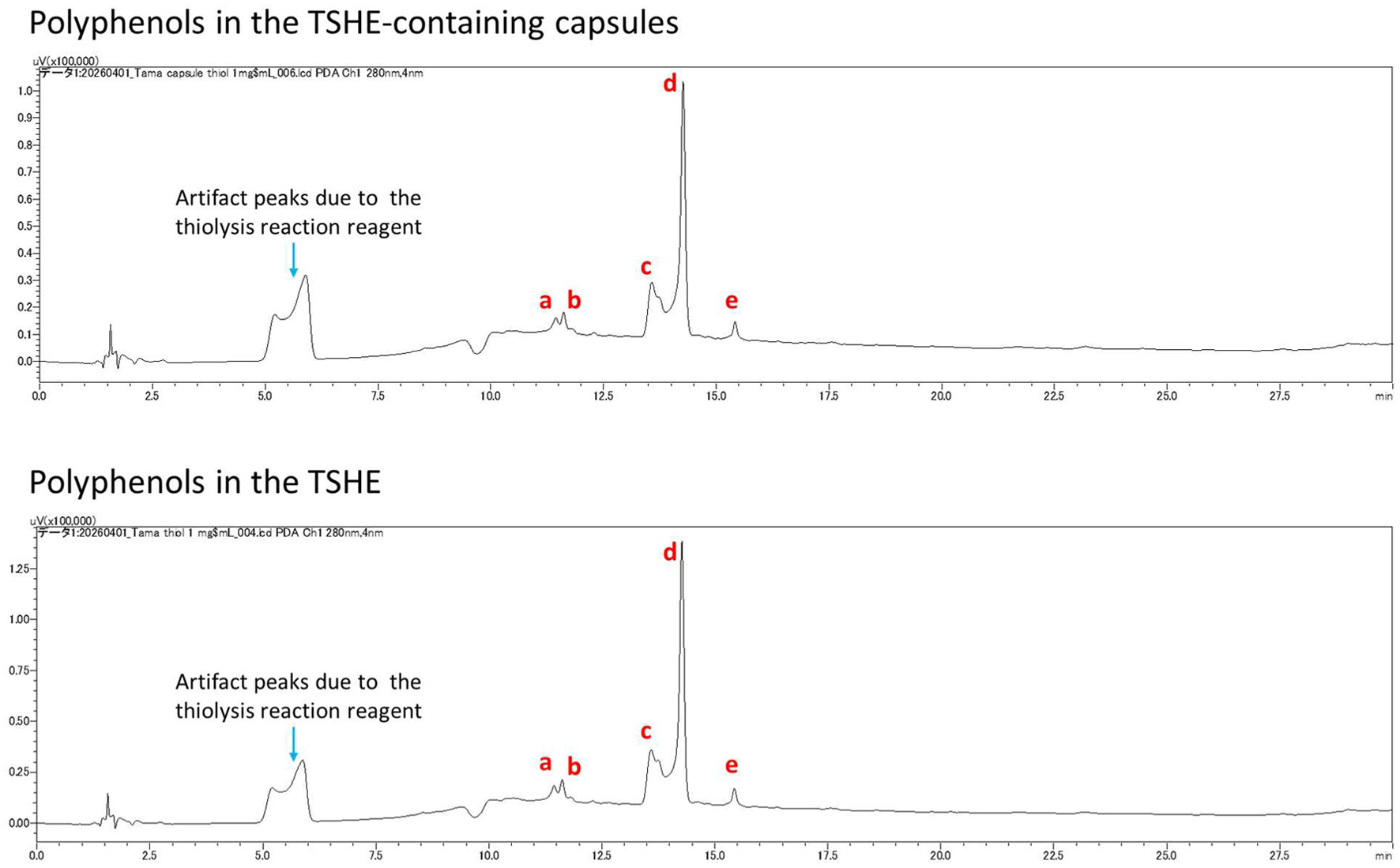 Click for large image | Figure 1. Comparison of HPLC elution patterns of polyphenols in the TSHE-containing capsules and in the TSHE. Upper panel: HPLC chromatogram of polyphenols extracted from the TSHE-containing capsules; lower panel: HPLC chromatogram of polyphenols from TSHE. Peak a was identified as the epicatechin monomer; peaks c and d were identified as the epicatechin-thiol adduct formed via the thiolysis of procyanidin B2; peaks b and e were unidentified. TSHE, tamarind seed husk extract. |
3.2. Participant demographics
The trial was conducted between 27 February and 14 December 2025. As shown in Figure 2, of the 316 individuals screened, 112 met the eligibility criteria and were subsequently randomized to either the TSHE group (n = 56) or the placebo group (n = 56). All 112 participants initiated the intervention and were included in the SAF, which was therefore identical to the ITT population. During follow-up, two placebo participants missed assessments (at weeks 8 and 12). Excluding 12 participants (6 per group) with insufficient compliance (< 80%), 100 participants (50 per group) were included in the PPS for efficacy analyses. Baseline characteristics of the PPS are summarized in Table 2.
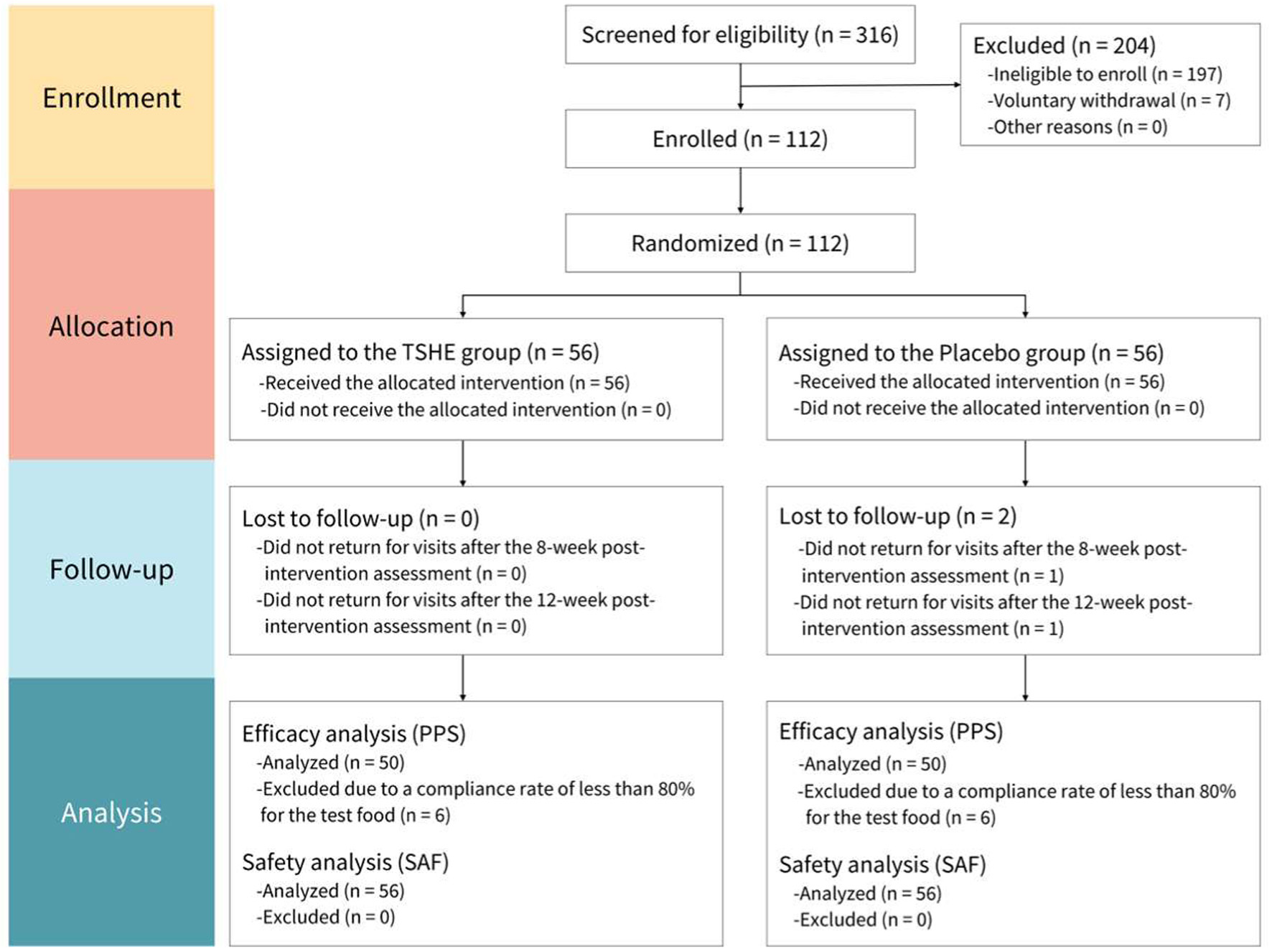 Click for large image | Figure 2. Flow diagram of the study design and procedures. SAF, safety analysis population; PPS, per-protocol set; TSHE, tamarind seed husk extract. |
Click to view | Table 2. Baseline characteristics of the intention-to-treat and per-protocol sets |
3.3. Effects of TSHE on AVFA and related outcomes
Anthropometric and vital measurements showed no clinically significant changes (Table S1). The primary and secondary efficacy outcomes are presented in Table 3. Data are expressed as EMMs with 95% confidence intervals (CIs), and p-values reflect between-group differences estimated by the linear mixed-effects model. AVFA at week 12 (primary outcome) was a trend toward lower in the TSHE group compared to the placebo group (115.9 cm2 [95% CI: 110.0, 121.7] vs. 123.3 cm2 [95% CI: 117.5, 129.2]), while the difference did not reach statistical significance (p = 0.077; Figure 3). At week 4, AVFA was significantly lower in the TSHE group than in the placebo group (114.3 cm2 [95% CI: 108.4, 120.1] vs. 122.6 cm2 [95% CI: 116.8, 128.5], p = 0.048). There was a consistent trend toward a larger percent reduction in AVFA in the TSHE group compared to the placebo group at both week 4 (−5.3% [95% CI: −10.6, 0.0] vs. 1.3% [95% CI: −4.0, 6.7], p = 0.083) and week 12 (−4.3% [95% CI: −9.6, 1.0] vs. 2.4% [95% CI: −2.9, 7.7], p = 0.080).
Click to view | Table 3. Primary and secondary efficacy outcomes (n = 50, per group). |
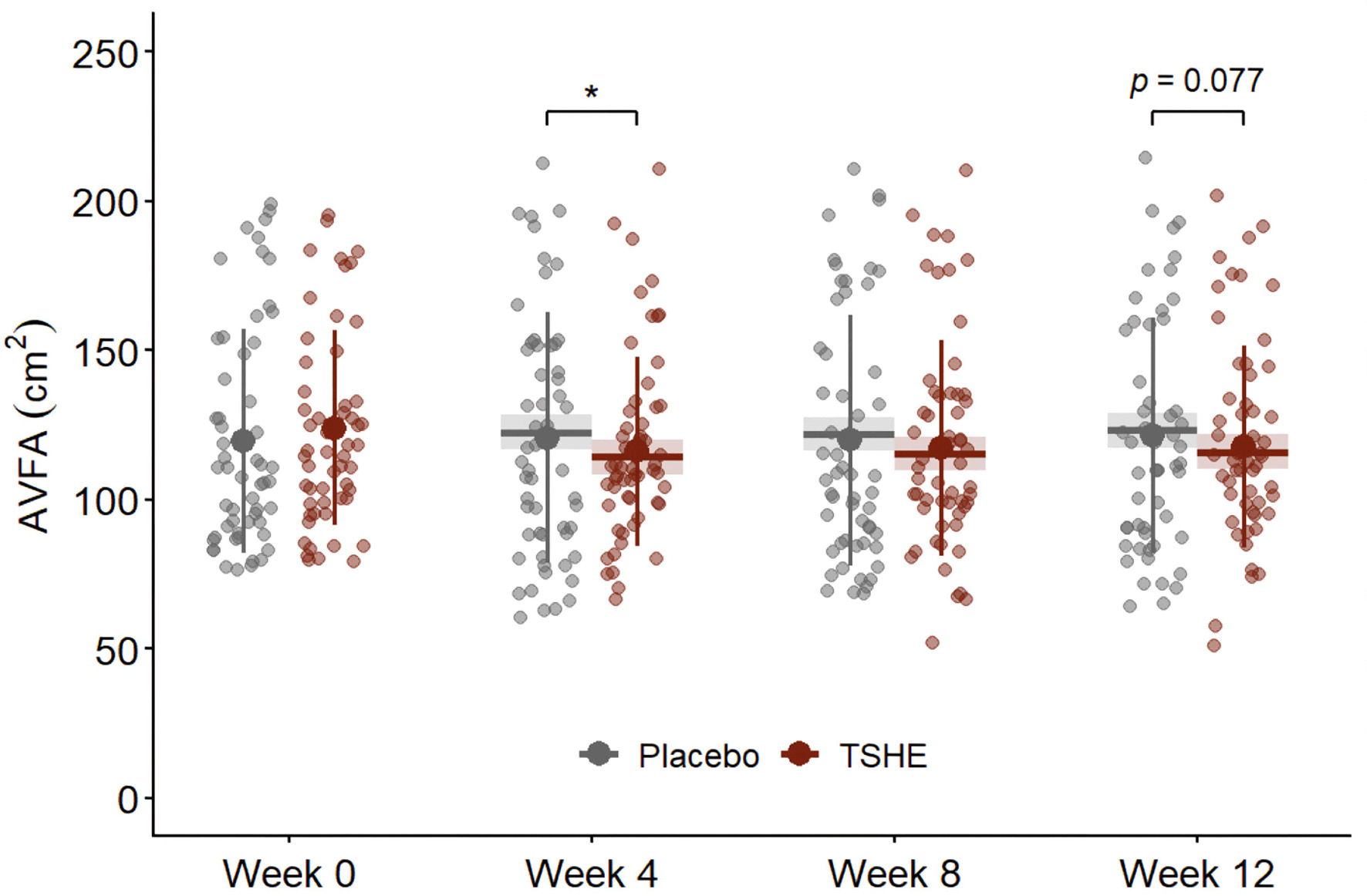 Click for large image | Figure 3. Abdominal visceral fat area (AVFA) at 12 weeks post-intervention (n = 50 per group). Differences between the TSHE and placebo groups were analyzed using a linear mixed-effects model with fixed effects for treatment group, time point, and the group × time point interaction, adjusting for baseline AVFA and the baseline × time point interaction. Subject-specific random effects were included to account for inter-individual variability. Individual participant values are shown as dots. Large, solid dots with vertical bars represent the mean ± SD, while EMMs and their 95% CIs are indicated by the horizontal line and shaded box, respectively. * p < 0.05 versus placebo. |
No significant differences were observed between groups for SFA at any time point. For TFA, the percent reduction from baseline was significantly larger in the TSHE group than in the placebo group at week 8 (−3.1% [95% CI: −6.1, −0.1] vs. 1.2% [95% CI: −1.7, 4.2], p = 0.043) and week 12 (−2.9% [95% CI: −6.0, 0.3] vs. 1.7% [95% CI: −1.5, 4.9], p = 0.048). Furthermore, the measured TFA values showed a consistent trend toward being lower in the TSHE group at week 8 (355.7 cm2 [95% CI: 344.7, 366.8] vs. 369.7 cm2 [95% CI: 358.7, 380.8], p = 0.078) and week 12 (355.9 cm2 [95% CI: 344.3, 367.5] vs. 370.5 cm2 [95% CI: 359.0, 382.1], p = 0.079).
As detailed in Table S2, among the blood parameters, fasting glucose was significantly lower in the TSHE group than in the placebo group at week 4 (88.2 mg/dL [95% CI: 85.6, 90.8] vs. 92.7 mg/dL [95% CI: 90.1, 95.3], p = 0.017). No significant differences were observed between groups in other outcomes.
3.4. Safety outcomes
No adverse events occurred during the trial. The incidence of laboratory values shifting outside normal reference ranges was low and generally comparable between groups (Table S3). Notably, significantly fewer participants in the TSHE group exhibited abnormal shifts for serum creatinine at the post-observation period (1.8% vs. 13.0%, p = 0.024) and potassium at week 4 (3.6% vs. 14.3%, p = 0.047) compared to the placebo group. Overall, these findings indicate that TSHE is safe for food.
3.5. Exploratory analysis in participants with a high visceral-to-subcutaneous fat ratio (VSR ≥ 0.4)
Overall, AVFA in the TSHE group showed a consistent trend toward a greater reduction compared to the placebo group, although the difference at week 12 did not reach statistical significance. To further investigate these findings, exploratory analyses were conducted in participants with a VSR ≥ 0.4, including 35 participants from the TSHE group and 30 from the placebo group. In the TSHE group, the mean age was 52.3 ± 8.8 years, with 23 males (65.7%) and 12 females (34.3%). In the placebo group, the mean age was 52.8 ± 9.9 years, with 28 males (93.3%) and 2 females (6.7%). At baseline, body fat percentage, fat-free mass, and muscle mass differed significantly between groups (body fat percentage: 30.6 ± 7.0% [TSHE group] vs. 27.4 ± 5.2% [placebo group], p = 0.042; fat-free mass: 51.5 ± 9.7 kg vs. 56.5 ± 6.4 kg, p = 0.018; muscle mass: 48.8 ± 9.3 kg vs. 53.5 ± 6.1 kg, p = 0.016).
As shown in Table 4, the AVFA values were significantly lower in the TSHE group than in the placebo group at week 4 (123.6 cm2 [95% CI: 117.2, 130.0] vs. 136.2 cm2 [95% CI: 129.2, 143.1], p = 0.010) and week 12 (127.5 cm2 [95% CI: 121.3, 133.7] vs. 138.1 cm2 [95% CI: 131.4, 144.8], p = 0.024). Significant between-group differences were also noted in the percent change in AVFA (−9.0% [95% CI: −14.2, −3.9] vs. 1.0% [95% CI: −4.5, 6.6], p = 0.009 at week 4; −7.2% [95% CI: −12.1, −2.3] vs. 0.5% [95% CI: −4.8, 5.8], p = 0.036 at week 8; −5.8% [95% CI: −10.6, −1.1] vs. 3.4% [95% CI: −1.8, 8.5], p = 0.011 at week 12). A similar pattern was observed for TFA. The measured values were significantly lower in the TSHE group than in the placebo group at week 4 (333.4 cm2 [95% CI: 321.9, 344.8] vs. 351.0 cm2 [95% CI: 338.7, 363.3], p = 0.040) and week 12 (335.7 cm2 [95% CI: 323.5, 347.8] vs. 356.1 cm2 [95% CI: 342.9, 369.2], p = 0.027). Significant differences were also observed for the percent change (−4.7% [95% CI: −7.9, −1.5] vs. 1.0% [95% CI: −2.5, 4.4], p = 0.018 at week 4; −3.8% [95% CI: −7.3, −0.4] vs. 2.0% [95% CI: −1.8, 5.7], p = 0.028 at week 8; −4.0% [95% CI: −7.4, −0.5] vs. 2.5% [95% CI: −1.2, 6.3], p = 0.014 at week 12). Moreover, at week 12, the TSHE group showed lower body weight (74.8 kg [95% CI: 74.1, 75.4] vs. 76.1 kg [95% CI: 75.4, 76.8], p = 0.010), BMI (26.8 kg/m2 [95% CI: 26.6, 27.1] vs. 27.2 kg/m2 [95% CI: 27.0, 27.5], p = 0.018), body fat percentage (28.6% [95% CI: 28.1, 29.2] vs. 29.5% [95% CI: 28.9, 30.1], p = 0.042), waist circumference (93.4 cm [95% CI: 92.3, 94.5] vs. 95.4 cm [95% CI: 94.2, 96.6], p = 0.020), hip circumference (98.4 cm [95% CI: 97.8, 99.1] vs. 99.7 cm [95% CI: 99.0, 100.4], p = 0.014), and fat mass (21.3 kg [95% CI: 20.7, 21.8] vs. 22.3 kg [95% CI: 21.7, 22.8], p = 0.013) than the placebo group. Although body fat percentage was higher in the TSHE group at baseline, the baseline-adjusted value at week 12 was significantly lower than in the placebo group. No significant differences were observed in SFA or other measured parameters, including blood variables (Table S4). A post hoc sensitivity analysis was performed with group and sex included as fixed effects and baseline AVFA, baseline body fat percentage, and baseline fat-free mass as covariates. In this analysis, AVFA at week 12 was lower in the TSHE group than in the placebo group (125.6 cm2 [95% CI: 115.9, 135.4] vs. 136.3 cm2 [95% CI: 124.9, 147.8]; p = 0.036; Table S5).
Click to view | Table 4. Exploratory analysis of efficacy outcomes in participants with a visceral-to-subcutaneous fat ratio (VSR) ≥ 0.4 |
| 4. Discussion | ▴Top |
Tamarind seed husk has attracted attention not only as an abundant by-product of tamarind seed gum production but also for its biological activity (Crispín-Isidro et al., 2019; Nasir et al., 2026; Sasidharan et al., 2014; Souza et al., 2025; Wandee et al., 2022). The present study investigated the potential of TSHE, an extract derived from tamarind seed husk, to reduce AVF accumulation. In this randomized, double-blind, placebo-controlled trial, the effects of TSHE on abdominal fat accumulation and related metabolic parameters were evaluated in Japanese adults with mild obesity (BMI of 25 to less than 30 kg/m2).
For the primary outcome, the TSHE group showed lower AVFA at week 12 than the placebo group, although the difference was not statistically significant (Figure 3). However, at week 4, the TSHE group showed a significantly lower AVFA and a significantly greater reduction from baseline compared to the placebo group. The same direction of change was observed consistently throughout the intervention period. These results suggest that TSHE reduced AVFA in the early weeks and that this suppressive effect was sustained throughout the trial.
The Japan Society for the Study of Obesity guidelines regard abdominal visceral and subcutaneous fat as a key indicator for assessing health risks, with AVF relating to metabolic syndrome and subcutaneous fat and body weight relating to musculoskeletal disorders (Japan Society for the Study of Obesity, 2022). CT-based measurement allows visceral and subcutaneous fat areas to be quantified separately, and is therefore well suited to evaluating these distinct risks.
AVFA in the TSHE group showed a consistent trend toward a greater reduction compared to the placebo group. An exploratory subgroup analysis based on a baseline VSR ≥ 0.4 was conducted. A VSR of 0.4 is the established threshold for visceral-type obesity (Matsuzawa et al., 1992), above which obesity-related risk factors increase (Hiuge-Shimizu et al., 2012). This subgroup showed a significant reduction in AVFA at week 12. Following established guidelines (Burke et al., 2015), this subgroup analysis should be interpreted with caution. These results support the consistency of AVF reduction with TSHE. In addition, fasting glucose was significantly lower in the TSHE group in the per-protocol set at week 4. Fasting glucose is associated with AVF accumulation (Kwon and Pessin, 2013; Nawrocki, 2004), so this change may reflect the reduction in AVF. On the other hand, no significant differences were found in serum lipids, including triglycerides and cholesterol. This may be because the participants were generally healthy, with baseline lipid levels within the normal range.
In this study, TSHE reduced AVFA in participants with a VSR ≥ 0.4. However, this study did not provide direct evidence for the underlying mechanism. The TSHE used in this study contains mainly epicatechin polymers, a class of polyphenols (Figure 1). One possible mechanism is the inhibition of digestive lipase activity. Epicatechin polymers were reported to inhibit lipase and reduce fat absorption (Oliveira et al., 2015). Tamarind seed coat extracts have also been reported to inhibit lipase and reduce fat absorption in vitro and in vivo (Sasidharan et al., 2014; Souza et al., 2025). The lipase inhibitor orlistat likewise reduces AVFA in clinical settings (Shirai et al., 2019; Smith et al., 2011). These facts suggest that lipase inhibition by epicatechin and its polymers may be one of the mechanisms of the AVF reduction in this study. AVF is more metabolically active than subcutaneous fat and responds more sensitively to intervention in the short term (Freedland, 2004; Wajchenberg, 2000). Therefore, even a modest reduction in fat absorption could affect AVF at an early stage. This may explain why AVFA decreased as early as week 4.
Procyanidin B2 and its polymers have been reported to modulate the gut microbiota and show anti-obesity effects in animals (Xing et al., 2019; Yu et al., 2022). Therefore, it is possible that TSHE suppressed the accumulation of AVF by modulating the gut microbiota.
Another possible mechanism involves adipokine balance, since AVF accumulation is often associated with elevated leptin and insulin (Décordé et al., 2009; Sasidharan et al., 2014). In animal models of diet-induced obesity, both a tamarind seed coat extract and grape seed procyanidins lowered insulin and leptin, raised adiponectin, and improved insulin signaling (Décordé et al., 2009; Sasidharan et al., 2014; Yogalakshmi et al., 2014).
Several limitations of this study should be acknowledged. First, the mechanism of action, including the inhibition of fat absorption, was not directly examined in this study. Second, gut-related endpoints, such as the gut microbiota, generation of short-chain fatty acids, and metabolic hormones, were not assessed. Third, diet and physical activity were monitored but not strictly controlled; however, dietary energy intake remained stable in both groups throughout the study (data not shown), suggesting that the reduction in AVF was not attributable to changes in energy intake from foods. Fourth, the participants were limited to Japanese adults with mild obesity, so the findings may not generalize to other populations. Fifth, the subgroup analysis was an exploratory post hoc analysis. Therefore, chance findings and multiple comparison effects cannot be completely excluded, requiring cautious interpretation. In the subgroup with a VSR ≥ 0.4, baseline body fat percentage, fat-free mass, and sex distribution were imbalanced between the groups. However, in the post hoc sensitivity analysis with sex as a fixed effect and baseline body fat percentage and fat-free mass as covariates in addition to baseline AVFA, AVFA at week 12 was lower in the TSHE group than in the placebo group (Table S5), indicating that these baseline imbalances did not account for the observed effect. To confirm the specific effects of TSHE, further well-designed stratified studies considering gender and visceral fat accumulation are warranted.
At the same time, this study population is clinically important. Asian populations accumulate more AVF and develop metabolic syndrome at lower BMI than Western populations (Li et al., 2023). While obesity is defined as a BMI of 30 kg/m2 or higher in Western countries, several organizations recommend a lower cut-off of 25 kg/m2 for Asians (Li et al., 2023; Zhu et al., 2021). Mild obesity (BMI of 25 to less than 30 kg/m2) with a VSR ≥ 0.4 describes exactly this group. The present finding that TSHE reduced AVFA at a practical dose in this population is therefore particularly meaningful, and suggests that TSHE may be useful as a functional food ingredient for preventing metabolic syndrome with individuals with mild obesity and a VSR ≥ 0.4.
| 5. Scientific innovation and practical significance | ▴Top |
Notably, this is the first study to show that TSHE reduces abdominal visceral fat in individuals with mild obesity and a VSR ≥ 0.4. While previous studies show that reducing visceral fat requires daily doses of 600 mg for apple polyphenols or 609.3 mg for green tea catechins (Akazome et al., 2010; Zhang et al., 2012), the present study showed that TSHE was effective at 200 mg/day. Achieving efficacy at this lower dose is highly beneficial for food application, as it limits undesirable changes to the taste and physical properties of the final products. The effect of TSHE also appeared early. AVFA was significantly lower in the TSHE group than in the placebo group at week 4, the first time point evaluated after baseline, and remained lower throughout the intervention period. In the subgroup with a VSR ≥ 0.4, the percent reduction in AVFA was significant at all three time points. In the studies described above, the first CT measurement was performed at week 8 or week 12. Nagao et al. (2001) measured every four weeks but compared the groups over the whole intake period rather than at each time point. A significant reduction at week 4 has therefore not been reported for these materials. For a food taken daily, an early effect is beneficial, as it supports continued intake.
| 6. Conclusion | ▴Top |
In this randomized, double-blind, placebo-controlled trial, TSHE reduced AVFA in Japanese adult participants with mild obesity and a VSR ≥ 0.4. Although the reduction in AVFA at week 12 in the per-protocol set was not statistically significant, AVFA was consistently lower in the TSHE group, and the percent reduction in TFA was significant at weeks 8 and 12. The effects were clearer in participants with a VSR ≥ 0.4. These findings support TSHE as a functional food ingredient for reducing AVFA, especially in Asian populations with mild obesity. Further studies are needed to clarify its mechanisms.
| Supplementary material | ▴Top |
Figure S1. Mass spectra of peaks a, c and d in the TSHE.
Table S1. Anthropometric measurements and vital signs (safety analysis population, n = 56 per group).
Table S2. Secondary efficacy outcomes (per-protocol set, n = 50 per group).
Table S3. Primary and secondary safety outcomes (safety analysis population).
Table S4. Exploratory analysis of secondary efficacy outcomes in participants with a visceral-to-subcutaneous fat ratio (VSR) ≥ 0.4 (TSHE, n = 35; placebo, n = 30).
Table S5. Comparison of abdominal visceral fat area (cm2) between the placebo and TSHE groups in a VSR ≥ 0.4 subgroup, with and without adjustment for covariates.
Acknowledgments
During the preparation of this manuscript, the authors used Gemini 3.1 Pro for English language editing and reference formatting. The authors have reviewed and edited the output and take full responsibility for the content of this publication. This research was funded by Pharma Foods International Co., Ltd. and MP GOKYO FOOD & CHEMICAL Co., Ltd.
Conflict of interest
H.Y., Y.Y., X.L., K.S., S.S., and Y.K. are employees of Pharma Foods International Co., Ltd.; M.H., J.K., Y.S., and Y.T. are employees of MP GOKYO FOOD & CHEMICAL Co., Ltd. These companies funded the study and supplied the test products. Because the authors are employees of the funding companies, the funders were involved in the design of the study, the interpretation of data, and the writing of the manuscript. The clinical trial was conducted independently by Orthomedico Inc., a contract research organization. T.T. is affiliated with Takara Clinic (Medical Corporation Seishinkai), which served as the trial site at the request of Orthomedico Inc.
Author contributions
Conceptualization, H.Y.; methodology, H.Y. and Y.Y.; investigation, H.Y., Y.Y. and T.T.; formal analysis, H.Y.; resources, T.T.; project administration, H.Y.; visualization, X.L. and H.Y.; writing—original draft preparation, H.Y., K.S. and X.L.; writing—review and editing, all authors; supervision, K.S. and Y.K. All authors have read and agreed to the published version of the manuscript.
| References | ▴Top |