| Journal of Food Bioactives, ISSN 2637-8752 print, 2637-8779 online |
| Journal website www.isnff-jfb.com |
Original Research
Volume 34, June 2026, pages 75-86
Brown rice bran fermented with Aspergillus oryzae attenuates cognitive decline in aged mice accompanied by induction of immediate early genes in hippocampus
Taiki Teruyaa, Chie Horiguchia, Eri Nakaminea, Yuhi Nemotoa, b, Tsugumi Uemaa, Keita Tamakia, Hideyuki Nemotoc, Yukiko Horiec, Masafumi Mayamad, Masataka Shikanaid, Hiroaki Masuzakia
aDivision of Endocrinology, Diabetes and Metabolism, Hematology, Rheumatology (Second Department of Internal Medicine), Graduate School of Medicine, University of the Ryukyus, Okinawa, 901-2720, Japan
bDepartment of Diabetes, Endocrinology and Metabolism, School of Medicine, Fukushima Medical University, Fukushima, 960-1295, Japan
cResearch and Development Division, Koken Co., Ltd. Hokkaido, 061-0211, Japan
dGenmai Koso Co., Ltd., Hokkaido, 001-0012, Japan
*Corresponding author: Hiroaki Masuzaki, Division of Endocrinology, Diabetes and Metabolism, Hematology and Rheumatology, Second Department of Internal Medicine, Graduate School of Medicine, University of the Ryukyus, 1076, Kiyuna, Ginowan City, Okinawa, 901-2720, Japan. E-mail: hiroaki@cs.u-ryukyu.ac.jp
DOI: 10.26599/JFB.2026.95034450
Received: February 12, 2026
Revised received & accepted: May 2, 2026
| Abstract | ▴Top |
Brown rice bran fermented with Aspergillus oryzae (FBRA), produced via fermentation of rice bran with the specific fungus, has antioxidant and anti-inflammatory properties in murine models. Because oxidative stress and neuroinflammation are critical in the brain aging and cognitive impairment, we hypothesized that FBRA would improve cognitive function. We explored the impact of FBRA on cognitive impairment in mice focusing on cognitive behaviors and the profile of hippocampal gene expression. Twenty-week-old male C57BL/6J mice were divided into four groups: lab chow (LCD), LCD+FBRA, high fat diet (HFD), and HFD+FBRA. After fifty weeks, cognitive function was examined by two behavioral tests. FBRA administration significantly improved cognitive function under both LCD and HFD conditions. Hippocampal microarray analyses revealed that expression levels of immediate early genes including Egr1 and Nr4a1 were exclusively increased in LCD+FBRA compared to LCD. These findings raise a possibility that FBRA improves cognitive function in aged mice at least partly by modulating hippocampal gene expression.
Keywords: FBRA; Cognitive function; Hippocampus; Immediate early genes; Aging
| 1. Introduction | ▴Top |
Cognitive impairment is a multifactorial pathological condition manifested by accumulation of β-amyloid, chronic inflammation, and excessive oxidative stress in brain (Bettio et al., 2017). The prevalence of cognitive impairment is increasing worldwide, but even brand-new pharmacological therapies still show a line of difficulties in efficacy, safety and socioeconomical burden (Livingston et al., 2024). In this context, dietary therapies to support brain health with aging is attracting broad attention.
Brown rice bran fermented with Aspergillus oryzae (FBRA), produced via fermentation of rice bran with the specific fungus, has been shown to exemplify antioxidant and anti-inflammatory properties (Kataoka et al., 2008; Shibata et al., 2006; Umeyama et al., 2020). For example, FBRA is potent to ameliorate acute and chronic dermatitis in mice (Umeyama et al., 2020), colitis induced by dextran sulfate sodium in rats (Kataoka et al., 2008), and hepatitis in rats (Shibata et al., 2006). Because excessive oxidative stress and neuroinflammation are implicated in brain aging and cognitive decline (Bettio et al., 2017), it was speculated that FBRA would also contribute to improving cognitive function.
Our team previously demonstrated in mice that brown rice-specific γ-oryzanol uniquely improves brain function via reduction of endoplasmic reticulum stress in the hypothalamus as well as epigenetic control of dopamine type 2 receptor in the brain reward system, thereby markedly alleviating dependence on animal fat (Kozuka et al., 2012; Kozuka et al., 2017). Previous studies also reported that components contained in FBRA such as ferulic acid and ergothioneine are implicated in brain health (Ishimoto and Kato, 2022; Michels et al., 2018; Mori et al., 2013; Nakamichi et al., 2016).
Oxidative stress and neuroinflammation seriously impair synaptic plasticity, a cellular substrate for learning and memory (Haxaire et al., 2012; Prieto et al., 2019). The concept of “synaptic” plasticity is widely recognized as cellular basis of learning and memory, allowing for activity-dependent changes in the intensity and efficiency of synaptic transmission in the brain (Bannerman et al., 2014; Lamprecht and LeDoux, 2004). Both long-term potentiation (LTP) and long-term depression (LTD) allow neurons to strengthen or weaken specific synaptic connections in response to experience, respectively. Through such a line of mechanisms, information is encoded as persistent changes in synaptic connections within neural circuits, thereby providing the cellular basis for learning and memory (Yasuda et al., 2022). Since FBRA exhibits antioxidant and anti-inflammatory properties, possible beneficial impact of FBRA on cognition would be mediated through molecular pathways related to synaptic plasticity. For example, immediate early genes (IEGs) are known to act as key regulators of activity-dependent neuronal responses (Khan et al., 2025). Indeed, expression of IEGs is induced in rapid response to neural activation, thereby controlling brain plasticity related to memory and learning. Actually, representative IEGs such as activity-regulated cytoskeleton-associated protein (Arc), Fos, and early growth response protein 1 (Egr1) are involved in neural circuit reconstruction, resulting in long-term memory (Chen et al., 2024; Jones et al., 2001; Plath et al., 2006). A series of IEGs is also induced by acquisition of new information, linking to improvement of cognitive function. Importantly, expression level of IEGs in the brain apparently decreases in aged mice (Chen et al., 2024; Qiu et al., 2016).
In this context, we explored whether FBRA administration would improve cognitive function in aged mice and examined changes in the expression levels of IEGs coupled with a variety of molecules closely associated with cognitive function.
| 2. Materials and methods | ▴Top |
2.1. Animals and diets
All animal studies were approved by the Animal Experiment Ethics Committee of the University of the Ryukyus (A2022077) and were performed according to the guidelines concerning the care and handling of experimental animals. Twenty-weeks-old male C57BL/6J mice obtained from Nihon SLC (Hamamatsu, Japan) were housed individually at 24 °C under a 12-h/12-h light/dark cycle. Mice were then divided into four groups; (1) mice fed lab chow (LCD: MF, Oriental Yeast Co., Ltd., Tokyo, Japan), (2) mice fed lab chow containing 10% FBRA (LCD+FBRA: Genmai Koso Co., Ltd. Sapporo, Japan, and Oriental Yeast Co., Ltd.), (3) mice fed high fat diet (HFD: HFD45, Oriental Yeast Co., Ltd., Tokyo, Japan), (4) mice fed high fat diet containing 10% FBRA (HFD+FBRA: Genmai Koso Co., Ltd. Sapporo, Japan, and Oriental Yeast Co., Ltd.). Nutritional compositions of LCD, LCD+FBRA, HFD and HFD+FBRA diets are shown in Table S1, and the composition of FBRA is shown in Table S2. The dietary composition in the present study was determined based on previous animal studies employing diets containing 10% FBRA, in which no adverse effects were reported (Kataoka et al., 2008; Shibata et al., 2006; Umeyama et al., 2020). In the present study, ordinary C57BL/6J mice were assumed to consume approximately 3 g of feed per day. Therefore, a diet containing 10% FBRA corresponds to an intake of approximately 300 mg of FBRA per mouse per day. Assuming an average body weight of 30 g, the daily intake for mice would be 10,000 mg/kg. Estimated human equivalent dose (HED) was calculated using the body surface area (BSA) normalization method, with a Km factor of 3 for mice and a Km factor of 37 for humans, as follows: HED (mg/kg) = animal dose (mg/kg) × (mouse Km factor / human Km factor) = 10,000 × (3/37) = 810 mg/kg. Based on this value, the daily intake for a 60 kg adult human would be approximately 48.6 g of FBRA per day.
Mice were provided with water and chow ad libitum for 50 weeks. Food intake was recorded weekly for each mouse throughout the experimental period. The cumulative intake of FBRA was calculated based on the amount of diet consumed and the proportion of FBRA (10%, w/w) in the diet. After the exposure in each diet, behavioral tests were conducted to assess cognitive function. A separate cohort of twenty-weeks-old mice was defined as the Young group, and these mice were also subjected to behavioral tests.
Following behavioral tests, mice were euthanized by rapid decapitation fed ad libitum in accordance with facility guidelines.
2.2. Behavioral test for cognitive function
2.2.1. Habituation
Habituation and pre-training for apparatus were conducted. Three days before the main test, mice were moved to the room where the test was scheduled to conduct according to the test time, with the test conducted several times to ensure mice were used to the device.
2.2.2. The novel object location test
To assess the ability of spatial memory of mice, the well-established novel object location (NOL) test was performed. The NOL test is based on the tendency of mice to spend more time exploring novel objects than familiar objects (Assini et al., 2009; Murai et al., 2007). The test consists of the training phase and the test phase. In the training phase, mice were given 10 min to freely explore two identical objects, and then were returned to their home cage. After 90 min rest, mice were returned to the test arena, and one of the sample objects was moved to a new location. In this test phase, the contact time with the objects was measured and the recognition index was calculated. Generally, mice spend more time exploring the object in a novel location than the object in a familiar location. However, in case they would spend the same duration of time exploring both objects, the result suggests that they cannot remember the location of the sample objects. The recognition index was quantified as (novel or familiar)/(novel+familiar)×100.
2.2.3. Two-trial Y-maze test
We also investigated the ability of spatial memory via a three-armed Y-maze (each arm 10 cm x 40 cm) made of gray plastic walls. The test consists of the training phase and the test phase. In the training phase, one arm of the Y-maze was closed and mice were then placed in the maze and allowed to explore the other two arms for 5 min. After the training, mice were returned to the home cage. The maze was cleaned after each mouse to remove odor cues. After 2 h, the closed arm was opened and mice were placed in the maze and allowed to explore the space for 5 min. In this test phase, the distance traveled on each arm was measured and the recognition index was calculated. Generally, mice prefer to explore a novel arm over a familiar arm in the Y-maze, and spontaneous exploration of a novel arm indicate the preservation of spatial recognition memory (Dellu et al., 1992; Dellu et al., 2000). The recognition index was quantified as (novel or familiar)/(novel+familiar)×100.
Both tests evaluate hippocampal-dependent short-term spatial memory, but differ in how novelty is introduced and detected. The NOL test requires mice to recognize a change in the spatial arrangement of familiar objects (Assini et al., 2009; Murai et al., 2007), while the two-trial Y-maze test requires mice to identify a novel arm in a familiar maze environment (Dellu et al., 1992; Dellu et al., 2000). Using both tests together allows for more multifaceted and reliable assessment of cognitive function.
2.3. Microarray analyses
Sampling of brain and liver tissue was performed under ad libitum feeding conditions. Total RNA was isolated with TRIzol reagent (Thermo Fisher Scientific Inc., Waltham, MA, USA). RNA quality assessment and microarray analysis were conducted by Filgen Inc. (Nagoya, Japan) using the Clariom S Assay, Mouse (Thermo Fisher Scientific Inc., Waltham, MA, USA). The cDNA synthesis, fragmentation, labeling, hybridization, washing, and scanning were performed with the GeneChip WT PLUS Reagent Kit and GeneChip system (Hybridization Oven 645, Fluidics Station 450, Scanner 3000 7G) according to the manufacturer’s protocols.
2.4. RNA extraction and quantitative real-time PCR
Sampling of brain tissue after behavioral tests was performed under ad libitum feeding conditions. Immediately after the removal of brain, 1-mm-thick coronal sections were removed, and both mRNA and protein samples were obtained from the same individual. Total RNA was isolated with the TRIzol reagent (Thermo Fisher Scientific Inc., Waltham, MA, USA). The cDNA was synthesized from total RNA using the iScript cDNA Synthesis Kit (Bio-Rad Laboratories, Hercules, CA, USA) according to the manufacturer’s instructions. Levels of mRNA for Egr1, nuclear receptor subfamily 4 group A member 1 (Nr4a1), Fos, Arc, ionized calcium-binding adapter molecule 1 (Iba1), tumor necrosis factor alpha (Tnf), interleukin-1β (Il1b), interleukin-6 (Il6), interleukin-10 (Il10), Brain-derived neurotrophic factor (Bdnf), doublecortin (Dcx), postsynaptic density protein 95 (Psd95), Synaptophysin (Syn), senescence markers cyclin-dependent kinase inhibitor 2A (Cdkn2a) and cyclin-dependent kinase inhibitor 1A (Cdkn1a) were determined by real-time qPCR analyses with Fast SYBR Green Master Mix (Thermo Fisher Scientific Inc., Waltham, MA, USA), respectively. 18S rRNA (Rn18s) mRNA was used as an internal standard for mouse cDNA. Details of the primers in the present study are shown in Table S3.
2.5. Protein extraction and western blotting
Samples of hippocampus from another side of brain section for mRNA analyses were assigned to immunoblot analyses. Homogenates of tissue samples cleared of debris (10 µg of protein) were subjected to 4–12% SDS-polyacrylamide gel electrophoresis (PAGE) (Thermo Fisher Scientific Inc., Waltham, MA, USA). The separated proteins were transferred to a polyvinylidene difluoride (PVDF) (Thermo Fisher Scientific Inc., Waltham, MA, USA) membrane and probed with rabbit polyclonal antibodies to DCX, IBA1, PSD95, and SYN as primary antibody. For blocking, PVDF Blocking Reagent for Can Get Signal (TOYOBO, Osaka, Japan) was used at room temperature for 1h, and both primary and secondary antibodies were diluted with Can Get Signal Solution 1 and Solution 2 (TOYOBO, Osaka, Japan), respectively. Membranes were incubated with the primary antibodies overnight at 4 °C, followed by incubation with horseradish peroxidase–conjugated secondary antibodies for 1 h at room temperature. Immune complexes were detected with chemiluminescence reagents (ImmunoStar LD, Wako, Osaka, Japan), and relative values were estimated by Amersham Imager 600 and Quant TL software. The expression level in each sample was expressed as a ratio to the expression level of β-actin, probed with mouse monoclonal antibody to β-actin as primary antibody. Details of the antibodies in the present study are shown in Table S4.
2.6. BrdU administration and immunohistochemistry
To evaluate newly populated cells in hippocampus of mice, bromodeoxyuridine (BrdU) (50 mg/kg) dissolved in phosphate buffered saline (PBS) was administered intraperitoneally (ip) once daily at 24 h intervals for four consecutive days. Mice were sacrificed four days after the last dose of BrdU under the ad libitum feeding condition. They were anesthetized with an overdose of combination among medetomidine (0.6 mg/kg), midazolam (8.0 mg/kg), and butorphanol (10 mg/kg) and perfused with 20 mL of PBS followed by 30 mL of fixative (4% paraformaldehyde in PBS). The brain was embedded in paraffin after fixation in 4% paraformaldehyde. Deparaffinize 6-micrometer coronal paraffin sections and incubated in 5% Goat Serum for 1 h for blocking. Then the brain tissues were incubated in primary antibody overnight at 4 °C. The primary antibody information is as follows: rat monoclonal anti-BrdU (Abcam, ab6326, 1:400), rabbit anti-doublecortin (Dcx) (Abcam, ab18723, 1:500). After the incubation overnight, sections were incubated with the secondary antibodies for 1 h at room temperature. The secondary antibody information is as follows: Anti-Rat IgG H&L (Abcam, ab150160, 1:1,000,), Anti-Rabbit IgG H&L (Abcam, ab150077, 1:1,000). Sections were then rinsed with PBS and covered with fluorescence mounting medium with 4′,6-diamidino-2-phenylindole (DAPI) (Vector Laboratories, H-1800).
2.7. Quantification of labeled cells in the hippocampal dentate gyrus
Six sections per individual were observed and images were captured at 10x and 40x magnifications using a fluorescence microscope (BZ-9000, KEYENCE), and the numbers of BrdU-positive cells, Dcx-positive cells, and BrdU/Dcx double-positive cells in hippocampal dentate gyrus were manually counted and quantified. BrdU, a thymidine analogue incorporated into dividing cells, labels proliferating cells, and Dcx serves as a marker of immature neurons. Therefore, BrdU/Dcx double-positive cells were defined as newly generated neurons.
2.8. Histological analyses of liver tissue
Mice were anesthetized with an overdose of combination among medetomidine (0.6 mg/kg), midazolam (8.0 mg/kg), and butorphanol (10 mg/kg) and perfused with 20 mL of PBS followed by 30 mL of fixative (4% paraformaldehyde in PBS). The Liver was embedded in paraffin after fixation in 4% paraformaldehyde, and sectioned at 6 μm thickness. Sections were stained with hematoxylin and eosin (H&E) for histopathological evaluation. Liver sections from four mice per group (n = 4) were analyzed. For each mouse, non-overlapping nine microscopic fields were randomly selected and observed under a light microscope at 100x magnification. The percentage of steatotic area relative to the total field area was quantified using Image J software.
2.9. Biochemical analyses in peripheral blood
Peripheral blood samples were collected via decapitation. Briefly, mice were euthanized by rapid decapitation without prior anesthesia, and trunk blood was collected into heparin tubes. The tubes were then centrifuged at 3,000 rpm for 15 min at 4 °C. The resulting plasma was stored at −80 °C. until biochemical analysis. Plasma samples were shipped on dry ice to Oriental Yeast Co., Ltd. (Tokyo, Japan) for biochemical analysis. A series of biochemical parameters including AST, ALT, ALP, BUN, CRE, UA, T-CHO, TG, LDL-C, HDL-C, and GLU were measured using an automated analyzer (JCA-BM6050) according to the manufacturer’s protocols.
2.10. Data analyses
Data were expressed as mean ± SEM and compared by t-test and analysis of variance (One-way ANOVA) followed by the Tukey-Kramer’s post hoc test. Statistical analyses were conducted using GraphPad PRISM (version 10) unless indicated otherwise. P value of <0.05 was considered as statistically significant.
| 3. Results | ▴Top |
3.1. Food intake and cumulative consumption of FBRA
Significant differences in average food intake were observed among four groups (one-way ANOVA, p < 0.05). Post hoc analysis revealed that the HFD+FBRA group showed higher food intake compared with the LCD group (p = 0.0057) and the HFD groups (p = 0.0115) (Table S5). Based on food consumption, the estimated cumulative intake of FBRA was approximately 142 g per mouse in the LCD+FBRA group and 131 g per mouse in the HFD+FBRA group, respectively.
3.2. FBRA attenuated cognitive decline in aged mice
To explore potentially-beneficial impact of FBRA on cognition in aged mice, we performed two kinds of short-term spatial memory tests in seventy-weeks-old C57BL/6J male mice.
Predictably, in the NOL test (Figure 1a), the LCD group did not show a significant difference in the proportion of exploration time for the displaced and non-displaced objects during the test session (Figure 1c). In contrast, the Young group consisted of twenty-weeks-old mice explored the displaced object more frequently than LCD group (p = 0.0114) (Figure 1b), indicating that the spatial memory of the aged LCD group was apparently inferior to that of the Young group.
 Click for large image | Figure 1. FBRA attenuated cognitive decline in aged mice. (a) Diagram illustrating the experimental design for NOL test. Recognition index of mice by NOL tests (n = 8 mice for the Young group, n = 13 mice for the LCD group, n = 15 mice for the LCD+FBRA group, n = 15 mice for the HFD group and n = 9 mice for the HFD+FBRA group). (B–F) Recognition index of each group: (b) Young, (c) LCD, (d) LCD+FBRA, (e) HFD, and (f) HFD+FBRA. (g) Diagram illustrating the experimental design for two-trial Y-maze test. Recognition index of mice by two-trial Y-maze tests (n = 8 mice for the Young group, n = 14 mice for the LCD group, n = 15 mice for the LCD+FBRA group, n = 15 mice for the HFD group and n = 10 mice for the HFD+FBRA group). (H–L) Recognition index of each group: (h) Young, (i) LCD, (j) LCD+FBRA, (k) HFD, and (l) HFD+FBRA. Data are presented as the mean ± standard error of the mean (s.e.m.). *p < 0.05, **p < 0.01, and ***p < 0.001; NS, not significant. Statistical analysis was performed using a two-tailed unpaired Student’s t-test. |
Importantly, the LCD+FBRA group explored the displaced object more frequently than LCD group (p = 0.0081) (Figure 1d), suggesting that FBRA improved the spatial memory in the LCD group. On the other hand, there was no significant difference in the exploration time for the displaced and non-displaced objects between the HFD group and the HFD+FBRA group (Figure 1e, f).
On the other hand, in the two-trial Y-maze test (Figure 1g), the HFD group did not show a significant difference in the proportion of exploration distance between the familiar and novel arms (Figure 1k), but the HFD+FBRA group explored the novel arms more frequently than HFD group (Figure 1l) (p = 0.0171), suggesting that the spatial memory of the HFD+FBRA group is superior to that of the HFD group. In contrast, the Young group as well as the LCD and LCD+FBRA groups explored the novel arms more frequently than HFD group (Figure 1h–j). Consequently, no significant differences in spatial memory were detected among these three groups in the two-trial Y-maze test.
3.3. FBRA potently induces the expression of IEGs in hippocampus of aged mice
We performed microarray analyses to explore global changes in gene expression in the hippocampus following FBRA administration. Differential expression analyses between the LCD group and the LCD+FBRA group identified only six genes by our a priori thresholds (linear fold change >2 or <0.5, computed from group-wise mean log2 expression, and p < 0.05, two-sided Student’s t-test) (Figure 2a). Notably, expression levels of IEGs including Egr1 and Nr4a1 were exclusively increased in the hippocampus of the LCD+FBRA group compared to the LCD group (Figure 2a). In contrast, differential expression analyses between the HFD and HFD+FBRA groups did not identify any significant changes in the expression of IEGs including Egr1 and Nr4a1 (Figure 2b).
 Click for large image | Figure 2. FBRA induces mRNA expression level of IEGs in the hippocampus of aged mice. (a, b) Volcano plot showing the fold change and p-value of individual genes obtained from microarray analysis. The vertical dotted lines indicate 2-fold up-regulation and down-regulation, respectively. The horizontal dotted line indicates significance threshold (p = 0.05). (a) Differences in gene expression in the hippocampus between the LCD group and the LCD+FBRA group. (b) Differences in gene expression in the hippocampus between the HFD group and the HFD+FBRA group. (c–f) Changes in the expression of IEGs in hippocampus as determined by qPCR analyses. The expression levels of IEGs including Egr1(c), Nr4a1(d) and Fos(e) were significantly increased in the LCD+FBRA group compared to the LCD group. (f) Arc showed a trend to increase in the LCD+FBRA group compared to the LCD group. Data are presented as the mean ± standard error of the mean (s.e.m.). *p < 0.05, and **p < 0.01; NS, not significant. Statistical analysis was performed using a two-tailed unpaired Student’s t-test (n = 5 mice per group: LCD, LCD+FBRA). |
Because microarray analyses screened apparent upregulation of IEGs (Egr1 and Nr4a1), we next focused on canonical IEGs for validation. Levels of mRNA for Egr1, Nr4a1, Fos, and Arc in the hippocampus were quantified by qPCR. Consistent with array results, Egr1, Nr4a1, and Fos were significantly increased in the hippocampus of the LCD+FBRA group compared to the LCD group (p < 0.05, two-tailed t-test) (Figure 2c–e). The level for Arc showed a trend to increase, but the difference did not reach statistical significance (Figure 2f).
3.4. FBRA showed no effects on hippocampal mRNA expression of genes related to neuroinflammation, neurogenesis, synaptic, and senescence
To further assess genes that did not reach statistical significance in the microarray analyses, qPCR was employed to precisely evaluate their expression. Levels of mRNA in the hippocampus were compared among four groups: LCD, LCD+FBRA, HFD, and HFD+FBRA. No significant differences were observed in the mRNA levels of Iba1, a marker of microglia, among four groups (Figure S1a). Similarly, no significant differences were observed in the mRNA level of inflammatory cytokines including Tnf, Il1β, Il6, and inhibitory cytokine Il10 (Figure S1b–e). No significant differences were observed in the mRNA levels of Bdnf, a neurotrophic factor, or Dcx, a marker of neurogenesis, among four groups (Figure S1f, g). In addition, the mRNA levels of the synapse-associated proteins Psd95 and Syn did not significantly differ among four groups (Figure S1h, i). Furthermore, no significant differences were observed in the mRNA levels of genes related to the senescence such as Cdkn2a and Cdkn1a among four groups (Figure S1j, k).
3.5. FBRA showed no effects on hippocampal protein levels related to cognitive function
To confirm whether changes in mRNA expression was tightly reflected by the protein level, amounts of interested proteins in the hippocampus was compared among four groups. Expectedly, no significant differences were observed in the protein levels of IBA1, DCX, PSD95, or SYN (Figure S2a–d). In the present study, IEGs in the hippocampus were limitedly analyzed at the mRNA level as the primary outcome. Because IEGs undergo a short life cycle involving transcription, mRNA localization, translation, and rapid degradation, total protein abundance in whole tissue may mask group differences. Therefore, we prioritized mRNA quantification over protein measurement as the most direct and reproducible approach.
3.6. FBRA did not affect neurogenesis in the hippocampus of mice
To explore the possibility that FBRA would promote neurogenesis, we tried to quantify the number of newborn neurons in the hippocampus by immunohistochemical analyses. BrdU, a synthetic analogue of thymidine that becomes incorporated into DNA during cell division, labels proliferating cells. Dcx, a microtubule-associated protein, serves as a marker of immature neurons. Therefore, BrdU/Dcx double-positive cells were defined as newly generated neurons. Comparing the number of BrdU-positive cells, Dcx-positive cells, and BrdU/Dcx double-positive cells in the hippocampal dentate gyrus, no statistically significant differences were observed in any of the indices among four groups (Figure 3a–c). Immunohistochemical staining of BrdU and Dcx in the hippocampal dentate gyrus also showed a similar pattern among four groups with no obvious differences in staining intensity or distribution (Figure 3d). These results suggest that FBRA does not promote neurogenesis in the hippocampus in our experimental paradigm.
 Click for large image | Figure 3. FBRA did not affect neurogenesis in hippocampal dentate gyrus of aged mice. (a–c) Evaluation of hippocampal neurogenesis by immunostaining for BrdU and Dcx. To assess the effects of FBRA on neurogenesis, the number of newborn neurons in the hippocampal dentate gyrus was quantified. Immunostaining was performed for BrdU, Dcx , and BrdU/Dcx double-positive cells. (a) Number of BrdU/Dcx double positive cells. (b) Number of BrdU-positive cells. (c) Number of Dcx-positive cells. No statistically significant differences were observed among four groups (LCD, LCD+FBRA, HFD, and HFD+FBRA). (d) Representative immunohistochemical images of hippocampal dentate gyrus in each group. Data are presented as the mean ± standard error of the mean (s.e.m.). Statistical analysis was performed using one-way ANOVA (n = 4 mice per group: LCD, LCD+FBRA, HFD, and HFD+FBRA). |
3.7. FBRA exclusively decreases expression level of genes related to oxidative stress in the liver
To further explore the potential impact of FBRA on the liver, microarray analyses were performed. Notably, expression levels of genes related to oxidative stress including glutamate–cysteine ligase catalytic subunit (Gclc), glutathione-disulfide reductase (Gsr), and glutathione S-transferase alpha 4 (Gsta4) were exclusively decreased in the liver of the HFD+FBRA group compared to the HFD group (p = 0.0106, 0.0217, and 0.0001, respectively; Figure 4a). In contrast, there was no difference between the HFD group and HFD+FBRA group in the mRNA levels of genes related to lipid metabolism including sterol regulatory element-binding protein 1 (Srebf1), fatty Acid Synthase (Fasn), acetyl-CoA carboxylase 1 (Acc1), peroxisome proliferator-activated receptor alpha (Ppara), and carnitine palmitoyltransferase 1A (Cpt1a) as well as those of inflammatory cytokines including Tnf, Il1β, and Il6 (Figure 4b).
 Click for large image | Figure 4. FBRA exclusively decreases mRNA expression level of oxidative stress-related genes in the liver. (a) Volcano plot showing the fold change and p-value of individual genes obtained from microarray analysis comparing the HFD group and the HFD+FBRA group. The vertical dotted lines indicate 2-fold up-regulation and down-regulation, respectively. The horizontal dotted line indicates significance threshold (p = 0.05). (b) Heatmap showing the expression profiles of selected genes obtained from microarray analysis comparing the HFD group and the HFD+FBRA group. The heatmap includes oxidative stress-related genes that showed significant differences between the two groups (p < 0.05) and additional genes related to lipid metabolism and inflammatory cytokines that did not reach statistical significance. Expression levels are represented by a color gradient. Red indicates high relative expression and blue indicates low relative expression. Each row represents a respective gene, and each column represents an individual sample (n = 5 mice for the HFD group and n = 4 mice for the HFD+FBRA group). |
3.8. FBRA did not affect hepatic steatosis
To further explore potentially-beneficial impact of FBRA on hepatic steatosis, H&E staining was performed on liver sections by quantifying the percentage of fatty degeneration areas in the liver. Expectedly, lipid droplet accumulation was significantly increased in the HFD group compared to the LCD group (Figure 5a, b). On the other hand, no clear difference was observed between the HFD group and the HFD+FBRA group (Figure 5a, b).
 Click for large image | Figure 5. FBRA did not affect lipid accumulation in the liver under HFD in mice. (a) H&E staining of liver sections showed that lipid droplet accumulation was significantly increased in the HFD group compared to the LCD group. On the other hand, no obvious difference was observed between the HFD group and the HFD+FBRA group. (b) Representative histological images of liver section in each group. Data are presented as the mean ± standard error of the mean (s.e.m.). *p < 0.05, **p < 0.01, ***p < 0.001, and ****p < 0.0001; NS, not significant. Statistical analysis was performed using one-way ANOVA (n = 36 fields per group: LCD, LCD+FBRA, HFD, and HFD+FBRA). |
3.9. FBRA did not affect blood parameters of liver function, renal function, and systemic parameters of lipid-glucose metabolism
A line of biochemical parameters in plasma was measured to see whether FBRA would impact on liver function, renal function, and systemic lipid and glucose metabolism. Consequently, no significant differences were observed in AST, ALT, ALP, BUN, CRE, UA, T-CHO, TG, LDL-C, HDL-C, or GLU between the LCD and LCD+FBRA groups, and between the HFD and HFD+FBRA groups (Table 1).
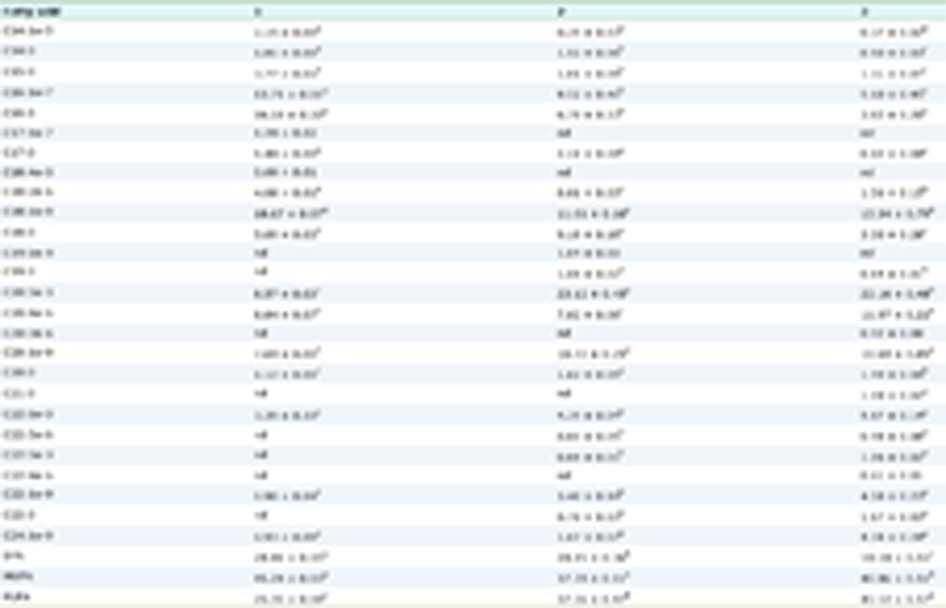 Click to view | Table 1. FBRA did not affect parameters of liver function, renal function, and systemic lipid-glucose metabolism |
| 4. Discussion | ▴Top |
In the present study, to explore potentially-beneficial impact of FBRA on cognition, behavioral and biochemical analyses were performed using aged mouse models in different dietary conditions. The NOL test showed that the LCD+FBRA group significantly improved cognitive performance compared to the LCD group (Figure 1c, d). On the other hand, no significant differences were observed between the two groups in the two-trial Y-maze test (Figure 1i, j). However, significant favorable differences were observed between the HFD group and the HFD+FBRA group in the two-trial Y-maze test (Figure 1k, l). Both tests can evaluate hippocampus-dependent short-term spatial recognition memory, but they differ in how novelty is introduced and detected. In the NOL test, mice are required to recognize changes in the spatial arrangement of familiar objects (Assini et al., 2009; Murai et al., 2007), whereas in the two-trial Y-maze test, they need to identify a novel arm in a familiar maze environment (Dellu et al., 1992; Dellu et al., 2000). In any case, it is possible that administration of FBRA preferentially enhances object-related spatial recognition in aged mice.
Under LCD, our result was further supported by hippocampal microarray and qPCR analyses, demonstrating exclusive and specific upregulation of a line of IEGs including Egr1, Nr4a1, and Fos (Figure 2a, c–e). It should be noted that IEGs are rapidly and transiently activated in response to neuronal activity, playing a critical role in synaptic plasticity and memory consolidation (Chen et al., 2024; Jones et al., 2001; Plath et al., 2006). Importantly, no significant differences were observed between the LCD and LCD+FBRA groups in the gene expression profile of other markers closely related to cognitive function including neurogenesis or synaptic proteins (Figure S1a–k). Consistent with this finding, FBRA did not affect hippocampal neurogenesis under LCD as well as HFD (Figure 3a–c). Collectively, our findings suggest that cognitive improvement by FBRA is mediated through mechanisms other than promotion of neurogenesis or increase in the expression of synaptic proteins.
Although precise mechanisms whereby FBRA induces IEGs expression particularly under LCD still remain unclear, previous studies showed that donepezil, a potent acetylcholinesterase inhibitor for the treatment of Alzheimer’s disease, is also potent to enhance expression of IEGs in the hippocampus and improve cognitive function in mice (Jiang et al., 2015; Narimatsu et al., 2009). Our data raise a possibility that, dependent on dietary conditions, FBRA may exert cognitively-beneficial effects via modulation of neurotransmission or intracellular signaling pathways related to neuronal activation.
The HFD used in the present study contains fat about 43.2%, which is apparently lower than the 60% high fat diets commonly used for experimental murine models relevant to obesity disease and diabetes. It should be noted that previous studies reported that mice fed a moderate-fat diet (approximately 41% fat content) did not show significant cognitive impairment nor aggravated neuroinflammation compared to the control group, while mice fed a 60% HFD showed both worsened cognitive impairment and aggravated neuroinflammation in the brain (Morrison et al., 2010; Pistell et al., 2010). Because FBRA is a kind of natural food-derived substance, not a pharmaceutical drug, we initially worried about the scenario that potentially- beneficial impact of FBRA would be missed by use of stronger phenotype of cognitive impairment and neuroinflammation in the brain on a 60% HFD. This is the chief reason we used mice fed a moderate-fat diet in the present study.
Although the HFD+FBRA group improved cognitive performance compared to the HFD group in two-trial Y-maze test (Figure 1k, l), no significant differences were detected between two groups in the NOL test (Figure 1e, f). Moreover, there was no significant difference in the expression levels of hippocampal IEGs between two groups under HFD (Figure 2b). These findings suggest that FBRA may promote expression of IEGs preferentially under normal dietary conditions, raising a possibility that FBRA may enhance maze exploration under HFD via mechanisms separate from induction of IEGs.
One plausible explanation is that neuroinflammation caused by HFD is potent to weaken neuronal responsiveness to external stimuli, thereby also attenuating IEGs induction. In contrast, in mice fed LCD, neuronal signaling pathways normally function, thereby FBRA is able to effectively promote expression of IEGs. In accordance with this notion, many of previous works demonstrated that neuroinflammation caused by HFD considerably disturbs a variety of transcriptional regulations of genes in the brain (Molteni et al., 2004; Sharma, 2021; Wu et al., 2004). In any cases, we do recognize that further research is warranted to elucidate underlying mechanisms.
FBRA contains a wide variety of bioactive compounds including ferulic acid and ergothioneine, all of which are implicated in improvement of cognitive function. The reported concentrations of ferulic acid and ergothioneine in FBRA are 9.43 mg/100 g and 8.3 mg/100 g, respectively (Horie et al., 2020; Ogawa et al., 2017). However, each amount seems to be considerably lower than doses relevant to improvement of brain function (Mori et al., 2013; Ishimoto and Kato, 2022). In this context, we speculate that it is unlikely that any one of compound per se significantly impacts on cognitive function. Rather, it would be plausible that synergistic action of multiple bioactive compounds in FBRA may beneficially impact cognitive function.
In addition to impact on cognition, we found that FBRA also exerted metabolically-beneficial effects in the liver under HFD. Expression level of genes involved in oxidative stress were exclusively decreased in the HFD+FBRA group compared to the HFD group (Figure 4a, b), whereas no differences were observed in the expression level of a series of genes related to lipid metabolism or inflammatory cytokines including Tnf, Il1β, and Il6 (Figure 4b). Consequently, FBRA did not ameliorate hepatic steatosis (Figure 5a), but also, no significant differences were found between the HFD and HFD+FBRA groups in metabolic parameters of liver function, renal function or lipid and glucose homeostasis (Table 1). These results suggest that FBRA would specifically decrease expression level of oxidative stress–related genes in the liver without affecting hepatic lipid metabolism per se or systemic metabolic parameters.
Several limitations in the present study should be acknowledged. First, both of behavioral tasks employed can evaluate hippocampus-dependent short-term spatial recognition memory, but are not appropriate for assessing long-term memory. Therefore, caution is needed when generalizing our results to memory function as a whole. Second, the number of animals for microarray and qPCR analyses was not so large, which may limit the strength of the conclusions. However, our results support the beneficial role of IEGs in improved cognition by FBRA. Third, FBRA was administered for a long period of 50 weeks, but it remains unclear whether similar effects could be achieved with shorter duration of treatment or different doses. Fourth, increased expression of IEGs including Egr1, Nr4a1, and Fos was observed following FBRA administration, but such genes represent only a subset of IEGs (Khan et al., 2025). Thus, one should avoid concluding that upregulation of these genes fully accounts for improvement in cognitive performance. Fifth, we only provided data showing that mRNA levels of IEGs were significantly elevated, but regrettably, protein levels of IEGs were not investigated. However, it should be noted that IEGs are characterized by rapid and transient expression dynamics through short half-life of mRNA and control of its degradation (Chen and Shyu, 1995; Lau and Nathans, 1987). Due to such a transient nature, biological significance of IEGs is often more manifested at the mRNA level as compared to the protein level, thereby masking the real impact of IEGs when measured across the entire tissue homogenate. In agreement with this notion, most of previous studies evaluated IEGs induction primarily at the mRNA level (Guzowski et al., 2001). In this context, in the present study, we prioritized mRNA quantification of IEGs as a highly sensitive and reproducible method for detecting early neural responses. However, we do recognize that validation of IEGs at the protein level will strengthen our findings, and we plan to execute a line of experiments at our earliest convenience.
Taken together, our data provide fresh insight into the potential role of FBRA in improving cognitive dysfunction during aging, accompanied by an exclusive induction of IEGs in hippocampus, thereby serving as a basis for future mechanistic studies.
| 5. Conclusions | ▴Top |
The present study demonstrates for the first time that FBRA improves cognitive function in aged mice accompanied by a preferential induction of IEGs in the hippocampus. These findings highlight FBRA as a promising dietary intervention to support brain health during aging. Further studies are warranted to elucidate the underlying molecular mechanisms and identify active components responsible for such effects.
| Supplementary material | ▴Top |
Table S1. Comparison of nutritional composition among lab chow diet (LCD), FBRA-containing LCD, high fat diet (HFD) and FBRA-containing HFD.
Table S2. Composition of FBRA.
Table S3. The primers for RT-qPCR used in the present study.
Table S4. Details of the antibodies used in the present study.
Table S5. Food intake and cumulative FBRA consumption in each group.
Figure S1. FBRA showed no effects on hippocampal mRNA expression of genes related neuroinflammation, neurogenesis, synaptic, and senescence. (a–k) The mRNA expression levels in the hippocampus were compared among four groups: LCD, LCD+FBRA, HFD, and HFD+FBRA. No significant differences were observed in any of groups for following targets: the microglial marker Iba1; inflammatory cytokines (Tnf, Il1b, Il6); the anti-inflammatory cytokine Il10; the neurotrophic factor Bdnf; the neurogenesis marker Dcx; synapse-associated proteins (Psd95 and Syn); and senescence markers (Cdkn2a and Cdkn1a). Data are presented as mean ± standard error of the mean (s.e.m.). Statistical analysis was performed using one-way ANOVA (LCD group: n = 8; LCD+FBRA group: n = 10; HFD group: n = 8; HFD+FBRA group: n = 6).
Figure S2. FBRA showed no effects on the level of hippocampal proteins related to cognitive function. (a–d) Protein levels in the hippocampus were compared among four groups: LCD, LCD+FBRA, HFD, and HFD+FBRA. No significant differences were observed in any of the groups for the following targets: IBA1, DCX, or the synapse-associated proteins PSD95 and SYN. Data are presented as mean ± standard error of the mean (s.e.m.). Statistical analysis was performed using one-way ANOVA (n = 6 mice per group: LCD, LCD+FBRA, HFD, and HFD+FBRA). (e) Representative Western blot images obtained during chemiluminescent detection.
Acknowledgments
This work was supported by Genmai Koso Co., Ltd. The authors thank Natsumi Higa for technical assistance. They also thank Mamiko Hirata and Chikako Noguchi for secretarial assistance.
Data availability statement
The datasets generated during the current study are available from the corresponding author upon reasonable request.
Conflict of interest
The authors declare that the research was partly funded by Genmai Koso Co., Ltd., but the sponsor had no role in data collection and analysis, interpretation of data, decision to submit, or preparation of the manuscript.
Author contributions
Conceptualization, Taiki Teruya, Hideyuki Nemoto, Yukiko Horie, Masafumi Mayama, Masataka Shikanai and Hiroaki Masuzaki; methodology, Taiki Teruya and Hiroaki Masuzaki; investigation, Taiki Teruya, Eri Nakamine and Tsugumi Uema; formal analysis, Taiki Teruya; writing - original draft, Taiki Teruya; writing - review & editing, Chie Horiguchi, Eri Nakamine, Yuhi Nemoto, Tsugumi Uema, Keita Tamaki, Hideyuki Nemoto, Yukiko Horie, Masafumi Mayama, Masataka Shikanai and Hiroaki Masuzaki; Supervision, Hiroaki Masuzaki.
| References | ▴Top |