| Journal of Food Bioactives, ISSN 2637-8752 print, 2637-8779 online |
| Journal website www.isnff-jfb.com |
Original Research
Volume 35, September 2026, pages 57-68
Probiotics characterization of fermented tiger nut-millet-blended beverage
Olawale Peter Odeleyea, Blessing Mosopeoluwa Gabriel-Ogunniyia, b, Grace Mosunmola Adegbolaa, c, Ruth Adefolakemi O. Gabriel-Ajobiewea, *, Bartholomew Saanu Adeleked, *
aFood and Applied Microbiology Unit, Department of Microbiology, Faculty of Life Sciences, Federal University, Oye-Ekiti, Nigeria
bDepartment of Microbiology and Public Health, Federal University of Agriculture, Abeokuta, Nigeria
cFood Microbiology Unit, Department of Food Science, Faculty of Food and Consumer Sciences, Ladoke Akintola University of Technology, Ogbomoso, Nigeria.
dDepartment of Microbiology, Faculty of Natural and Applied Sciences, Federal University of Technology and Environmental Sciences, Iyin-Ekiti, Nigeria
*Corresponding author: Ruth Adefolakemi O. Gabriel-Ajobiewe, Food and Applied Microbiology Unit, Department of Microbiology, Faculty of Life Sciences, Federal University, Oye-Ekiti, Nigeria. E-mail: adefolakemi.gabriel-ajobiewe@fuoye.edu.ng; Bartholomew Saanu Adeleke, Department of Microbiology, Faculty of Natural and Applied Sciences, Federal University of Technology and Environmental Sciences, Iyin-Ekiti, Nigeria. E-mail: bartholomew.adeleke@futes.edu.ng
DOI: 10.26599/JFB.2026.95035456
Received: July 6, 2026
Revised received & accepted: September 2, 2026
| Abstract | ▴Top |
This study investigated the functional characteristics and probiotic potential of lactic acid bacteria (LAB) isolated from a fermented tiger nut-millet beverage. The beverage was prepared using a traditional tiger nut fermentation process (sorting, cleaning, soaking, spicing, wet-grinding, fermentation, filtration, chilling, and storage), and samples were collected at 6-hour intervals throughout the 48-hour fermentation time for microbiological analysis. The isolated LAB were evaluated for probiotic properties, including tolerance to acidic pH, bile salts, and phenol. Their antibiotic susceptibility and antibacterial activities against selected pathogenic bacteria were also assessed. LAB counts increased from 2.30 to 6.40 log10 CFU/mL during fermentation. The isolates were identified using the API 50 CHL system and 16S rRNA gene sequencing, revealing members of the genera Leuconostoc and Lactiplantibacillus. Selected isolates exhibited strong tolerance to simulated gastrointestinal conditions, with survival rates exceeding 50% at acidic pH (2.0–3.0), bile salt concentrations (0.3% and 2%), and phenol concentrations (0.2% and 0.3%). The isolates also demonstrated susceptibility to clinically relevant antibiotics and exhibited antibacterial activity against selected foodborne pathogens, producing inhibition zones ranging from 11.0 to 20.0 mm. These findings demonstrate the probiotic potential of LAB and their suitability for developing non-dairy functional foods and nutraceutical products.
Keywords: Cereal-based beverage; Functional foods; Gastrointestinal health; Lactic acid bacteria; Probiotics
| 1. Introduction | ▴Top |
Fermented foods have been consumed for centuries because of their enhanced nutritional value, extended shelf life, improved sensory properties, and potential health benefits (Tamang et al., 2020; Marco et al., 2021). Fermentation is driven primarily by microorganisms, particularly lactic acid bacteria (LAB), yeasts, and molds, which convert carbohydrates into organic acids, alcohols, and other metabolites that improve food quality and preservation (Kitessa, 2024). These microbial activities enhance nutrient bioavailability, improve digestibility, inhibit spoilage microorganisms, and contribute to food safety (Rymuszka and Gorczynska, 2026). More recently, plant-based fermented beverages have gained considerable attention owing to the increasing consumer demand for functional foods with health-promoting properties (Adegbola et al., 2026). Functional foods are defined as foods that provide physiological benefits beyond basic nutrition and may reduce the risk of chronic diseases while promoting overall health (Debri et al., 2026). Consequently, fermented foods and beverages have become attractive dietary options because they contain beneficial microorganisms and bioactive compounds that support gastrointestinal health and improve nutritional quality.
Lactic acid bacteria are among the most important microorganisms involved in the fermentation of traditional foods and beverages worldwide. During fermentation, LAB metabolize carbohydrates to produce organic acids, enzymes, and antimicrobial compounds that inhibit spoilage and pathogenic microorganisms while enhancing food preservation and quality (Zapaśnik et al., 2022; Anumudu et al., 2024). In addition to their technological roles, many LAB species possess probiotic properties, defined as the ability to confer health benefits on the host when administered in adequate amounts (Mafe et al., 2026). These microorganisms help maintain intestinal microbial balance, strengthen the intestinal barrier, modulate immune responses, and contribute to overall gastrointestinal health. Consequently, the development of fermented foods containing viable probiotic LAB has become an important focus of food science and nutritional research (Marco et al., 2021).
The probiotic efficacy of LAB depends largely on their ability to survive the harsh conditions of the gastrointestinal tract, including exposure to gastric acidity, bile salts, and phenolic compounds (Bernatek et al., 2022; Aleman and Yadav, 2024). These metabolic compounds in the gut are known to be associated with the promotion of gut health by stimulating the growth of probiotic microorganisms and inhibiting the growth of pathogens (Tang et al., 2023). Therefore, tolerance to low pH, bile salts, and phenol is widely used as an in vitro criterion for evaluating probiotic potential (Zheng et al., 2020). Microorganisms that can withstand these adverse conditions are more likely to survive gastrointestinal transit, colonize the intestine, and exert beneficial physiological effects.
Recent studies have shown that traditional fermented foods and beverages prepared from cereals, legumes, fruits, nuts, and vegetables are valuable sources of probiotic LAB with beneficial effects on human health (Erem and Kılıç-Akyılmaz, 2024; Chen et al., 2026). Consumption of these fermented products has been associated with improved digestion, enhanced immune function, and a reduced incidence of gastrointestinal disorders. Despite the growing interest in plant-based probiotic beverages, the probiotic characteristics of LAB isolated from fermented tiger nut-millet beverages remain largely unexplored compared with those from other plant-based substrates such as soy, oat, and almond beverages.
Therefore, this study aimed to isolate, characterize, and identify LAB associated with fermented tiger nut–millet beverage and to evaluate their probiotic potential. Specifically, the isolates were assessed for tolerance to acidic pH, bile salts, and phenol, as well as their antibiotic susceptibility and antibacterial activity against selected pathogenic bacteria. The findings provide valuable insights into the probiotic potential of fermented tiger nut–millet beverage and its suitability as a promising non-dairy functional food for improving human health.
| 2. Materials and methods | ▴Top |
2.1. Sample preparation
Yellow tiger nuts and finger millet were used as the primary raw materials, while date fruits and sweet potatoes served as natural sweeteners. All materials were purchased from a local market in Ado-Ekiti, Ekiti State, Nigeria, and transported to the Microbiology Laboratory, Federal University Oye-Ekiti. The samples were sorted, cleaned, washed thoroughly with sterile water under aseptic conditions, and weighed before processing. Triplicate batches (n = 3) were prepared by steeping the samples in 2,500 mL of distilled water at room temperature in sterile plastic containers. A total of 1,000 g of substrate, comprising 750 g of tiger nuts and 250 g of finger millet (4:1, w/w), was used for beverage production. Subsequently, 100 g of the selected natural sweetener was added before blending (New Silver Crest Electric Rotary Blender, SCB-9880, Zhejiang, China). Fermentation was carried out following the traditional tiger nut milk production process for 36 hours.
2.2. Isolation of lactic acid bacteria
Samples were collected from the fermenting mixture at 0, 6, 12, 18, 24, and 36 hours of fermentation. Each sample was serially diluted ten-fold in 0.1% peptone water and plated on de Mann Rogosa, and Sharpe (MRS) agar using the pour plate technique. The inoculated plates were incubated anaerobically at 37°C for 48 hours (Jenway Incubator: Jenway Ltd, Staffordshire, UK). Distinct colonies were selected and repeatedly sub-cultured on fresh MRS agar plates until pure cultures were obtained.
2.3. Cultural, morphological and biochemical characterization of LAB
The purified isolates were characterized based on colony morphology, including colony colour, size, shape, surface texture, margin, elevation, and Gram reaction, following standard procedures (Kunchala et al., 2016; Divisekera et al., 2018). Gram staining was performed using freshly cultured isolates, microscopically viewed (Microscope: Motic BA310, Xiamen, China), and observations were recorded. The isolates were further characterized using catalase, citrate utilization, oxidase, hydrogen sulphide (H2S) production, and carbohydrate fermentation tests.
2.4. Tolerance to environmental stress
2.4.1. Growth at different temperatures
Each LAB isolate was inoculated into freshly prepared MRS broth supplemented with 1% glucose and incubated anaerobically at 15°C and 45°C for 24 hours (Sharma et al., 2016). Growth was determined by the presence of visible turbidity.
2.4.2. Growth at different sodium chloride concentrations
Pure LAB colonies were inoculated into MRS broth containing 4%, 6.5%, and 8% (w/v) NaCl. The cultures were incubated anaerobically at 37°C for 24 hours, after which growth was assessed by observing turbidity.
2.5. Identification of LAB isolates
The isolates were identified using the commercial API 50 CHL system (bioMérieux®, France) according to the manufacturer’s instructions. Carbohydrate fermentation profiles generated from the API 50 CH strips were interpreted using the APIweb™ identification software. Pure cultures were maintained on MRS agar slants for subsequent analyses.
2.6. In vitro evaluation of probiotic properties
2.6.1. Acid tolerance
Acid tolerance was evaluated according to the method described by Suwannaphan (2021). Overnight cultures were harvested by centrifugation (TGL-16R Tabletop High Speed Refrigerated Centrifuge, Changsha, Hunan, China) at 5,000 rpm for 10 minutes at 4°C. The cell pellets were washed with phosphate-buffered saline (PBS; pH 7.2) and resuspended in 500 μL of MRS broth adjusted to pH 2.0, 2.5, or 3.0 using 1 N HCl. The suspensions were incubated anaerobically at 37°C for 3 hours. Samples collected at 0 and 3 hours were serially diluted, spread-plated on MRS agar, and incubated anaerobically at 37°C for 48 hours.
The percentage survival was calculated as follows:
2.6.2. Bile salt tolerance
Bile salt tolerance was determined following the method of Suwannaphan (2021). Overnight cultures were centrifuged at 5,000 rpm for 10 minutes at 4°C, washed with PBS (pH 7.2), and resuspended in 500 μL of MRS broth supplemented with 0.3% and 2.0% (w/v) bile salts. The suspensions were incubated anaerobically at 37°C for 3 hours. Viable counts were determined at 0 and 3 hours using the procedure described above. Survival percentages were calculated using the same equation, and isolates with survival rates exceeding 75% were considered bile tolerant.
2.6.3. Phenol tolerance
Phenol tolerance was assessed according to Suwannaphan (2021). Harvested LAB cells were washed with PBS (pH 7.2) and resuspended in 500 μL of MRS broth containing 0.2% or 0.3% (w/v) phenol. The suspensions were incubated anaerobically at 37°C for 3 hours. Viable cell counts were determined before and after incubation, and survival percentages were calculated using the equation described above. Isolates exhibiting survival rates above 75% were considered phenol-tolerant.
2.7. Antibiotic susceptibility testing
The antibiotic susceptibility profiles of the LAB isolates were determined using the agar disc diffusion method following CLSI (2012) guidelines. The isolates were tested against ampicillin (AMP), cotrimoxazole (COT), gentamicin (GEN), erythromycin (ERY), tetracycline (TET), vancomycin (VAN), ciprofloxacin (CIP), meropenem (MEM), Augmentin (AUG), ceftazidime (CPZ), cefuroxime (CRX), and cephalexin (CP).
2.8. Antibacterial activity
The antibacterial activity of the LAB isolates was evaluated against Staphylococcus aureus ATCC 25923, Bacillus cereus NCIB 6349, Pseudomonas aeruginosa NCIB 3471, Escherichia coli, and Klebsiella pneumoniae. The test organisms were obtained from the Microbial Culture Collection of the Department of Microbiology, Obafemi Awolowo University, Ile-Ife, Nigeria. The agar well diffusion method described by Divisekera et al. (2019) was employed. Overnight cultures of the test organisms were adjusted to a 0.5 McFarland standard (1.5 × 10⁸ CFU/mL) and spread onto nutrient agar plates. Wells of 6 mm diameter were prepared using a sterile cork borer, and 100 μL of LAB cell-free supernatant was dispensed into each well. Phosphate-buffered saline served as the negative control. Plates were incubated at 37°C for 24 hours, after which inhibition zones were measured. Antibacterial activity was interpreted according to Sanam et al. (2022) with slight modifications: inhibition zones <4 mm were considered very weak, 5 mm weak, 5–10 mm moderate, 10–20 mm strong, and 20–30 mm very strong.
2.9. Molecular identification of probiotic LAB
Only isolates exhibiting survival rates greater than 75% under acidic, bile salt, and phenol stress conditions were selected for molecular identification using 16S rRNA gene sequencing.
2.9.1. Genomic DNA extraction
Genomic DNA was extracted from six selected LAB isolates exhibiting similar biochemical and probiotic characteristics. Overnight cultures grown in MRS broth were centrifuged at 10,000 rpm for 3 minutes. The cell pellets were resuspended in Tris-EDTA buffer before DNA extraction following the manufacturer’s protocol. DNA purity and integrity were assessed before PCR amplification.
2.9.2. PCR amplification and sequencing
The 16S rRNA gene was amplified using the universal bacterial primers 27F (5′-AGAGTTTGATCCTGGCTCAG-3′) and 1492R (reverse primer). PCR products were sequenced using an ABI 3100 Genetic Analyzer (ABI 3100 Genetic Analyzer, California, USA). The obtained sequences were compared with those in the NCBI database using the BLAST algorithm, and phylogenetic analysis was performed using the neighbour-joining method implemented in MEGA version 12.
2.10. Statistical analysis
All experiments were conducted in triplicate (n = 3), and results are presented as mean ± standard deviation. Statistical analyses were performed using one-way analysis of variance (ANOVA) followed by Duncan’s multiple range test. Differences were considered statistically significant at p < 0.05.
| 3. Results | ▴Top |
3.1. Lactic acid bacteria counts during fermentation
The changes in LAB counts during fermentation of the tiger nut–millet beverages are presented in Table 1. LAB populations increased progressively throughout the fermentation period in all beverage formulations. At 6 hours of fermentation, LAB counts ranged from 4.57 to 5.43 log10 CFU/mL, while the highest counts (6.01–6.40 log10 CFU/mL) were recorded after 36 hours. The sweet potato-sweetened formulations generally supported greater bacterial growth than the other formulations. Notably, TMSP F3 and TMSP F5 exhibited rapid bacterial proliferation, reaching 6.26 and 6.28 log10 CFU/mL, respectively, after 18 hours of fermentation.
 Click to view | Table 1. Lactic acid bacteria count (CFU/mL) from fermented spicy tiger nut-millet beverage |
3.2. Cultural and morphological characteristics of LAB isolates
The cultural and morphological characteristics of the LAB isolates obtained from the fermented tiger nut-millet beverages are summarized in Table S1. The isolates displayed considerable diversity in colony morphology. Colony size ranged from small to large, while colony colour varied from white and creamy to light yellow. Most isolates exhibited entire margins and smooth surfaces; however, isolates TMD4, TMD5, TMSP3, TMSP7, and TMDSP3 from the fermenting substrates displayed wrinkled colony surfaces. Colony elevation was predominantly convex, although a few isolates exhibited flat colonies. Gram staining confirmed that all isolates were Gram-positive, and microscopic examination revealed both cocci and rod-shaped morphologies.
3.3. Biochemical and physiological characteristics of the LAB isolates
The biochemical and physiological characteristics of the LAB isolates are presented in Table 2. All isolates fermented glucose, lactose, and sucrose with gas production and tested negative for catalase, citrate utilization, oxidase, and hydrogen sulphide production, consistent with the typical characteristics of LAB.
Click to view | Table 2. Biochemical characterization and Physiological ability of LAB isolated from naturally sweetened spicy fermented tiger nut-Millet beverage |
Most isolates grew at both 15°C and 45°C, indicating broad temperature tolerance. However, isolates TMD4, TMSP3, TMSP5, TMSP7, TMDSP2, and TMDSP5 failed to grow at 45°C. Furthermore, all isolates demonstrated tolerance to 4% and 6.5% NaCl, whereas only a few isolates exhibited growth at 8% NaCl, indicating variability in salt tolerance among the isolates.
3.4. Survival of LAB isolates under stimulated gastrointestinal conditions
The survival of the LAB isolates under acidic, bile salt, and phenol stress conditions is shown in Figures 1–3. At acidic pH (Figure 1), the isolates exhibited appreciable acid tolerance, with survival rates ranging from approximately 53% to 80% after 3 hours of exposure. Several isolates maintained survival rates exceeding 75%, indicating strong resistance to acidic conditions that simulate the gastric environment. Similarly, most isolates showed high tolerance to bile salts (Figure 2), maintaining survival rates above 70% at both 0.3% and 2% bile salt concentrations. These findings demonstrate the ability of the isolates to withstand conditions resembling those encountered in the small intestine. The LAB isolates also demonstrated considerable tolerance to phenol (Figure 3). Survival rates were generally highest in the medium supplemented with 0.2% phenol, indicating that the selected isolates possess adaptive mechanisms that enable survival in phenolic environments.
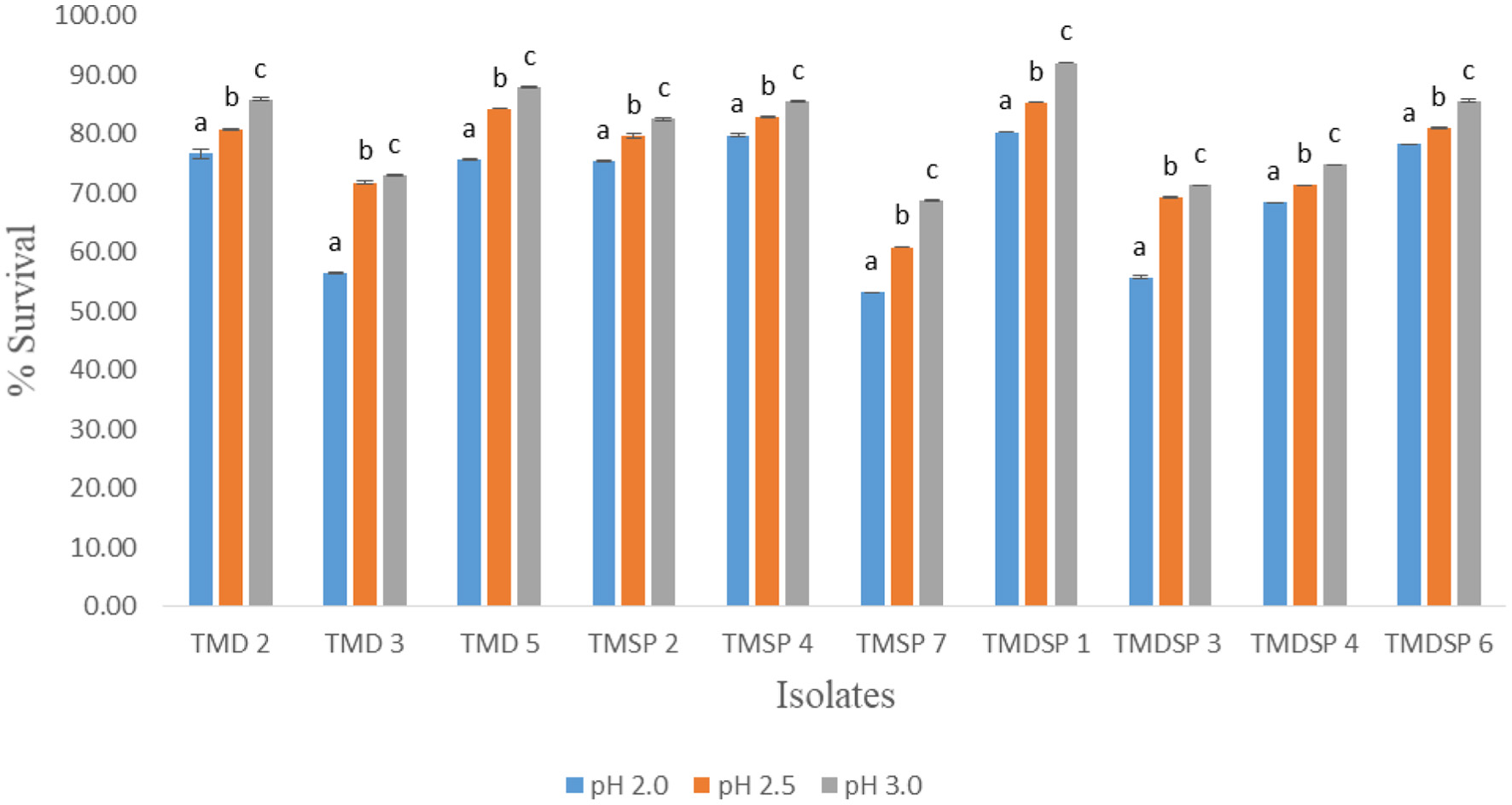 Click for large image | Figure 1. Percentage survival of LAB isolates at different acid levels after 3 hours of exposure. (n = 3). Data are presented as mean ± SEM (n = 3 independent replicates per isolate). Error bars denote ± SEM. For each isolate, survival was compared across the three pH levels using one-way ANOVA followed by pairwise t-tests with Bonferroni correction; survival differed significantly among all three pH levels for every isolate tested (p < 0.05 in all cases). Bars labeled a, b, and c within an isolate differ significantly from one another. Key: TMD (2, 3 and 5) = Bacterial Isolates from Tiger nut-Millet beverage sweetened with Date fruit; TMSP (2, 4, and 7) = Bacterial Isolates from Tiger nut-Millet beverage sweetened with Sweet potato; TMDSP (1, 3, 4 and 6) = Bacterial Isolates from Tiger nut-Millet beverage sweetened with Date fruit and Sweet potato. |
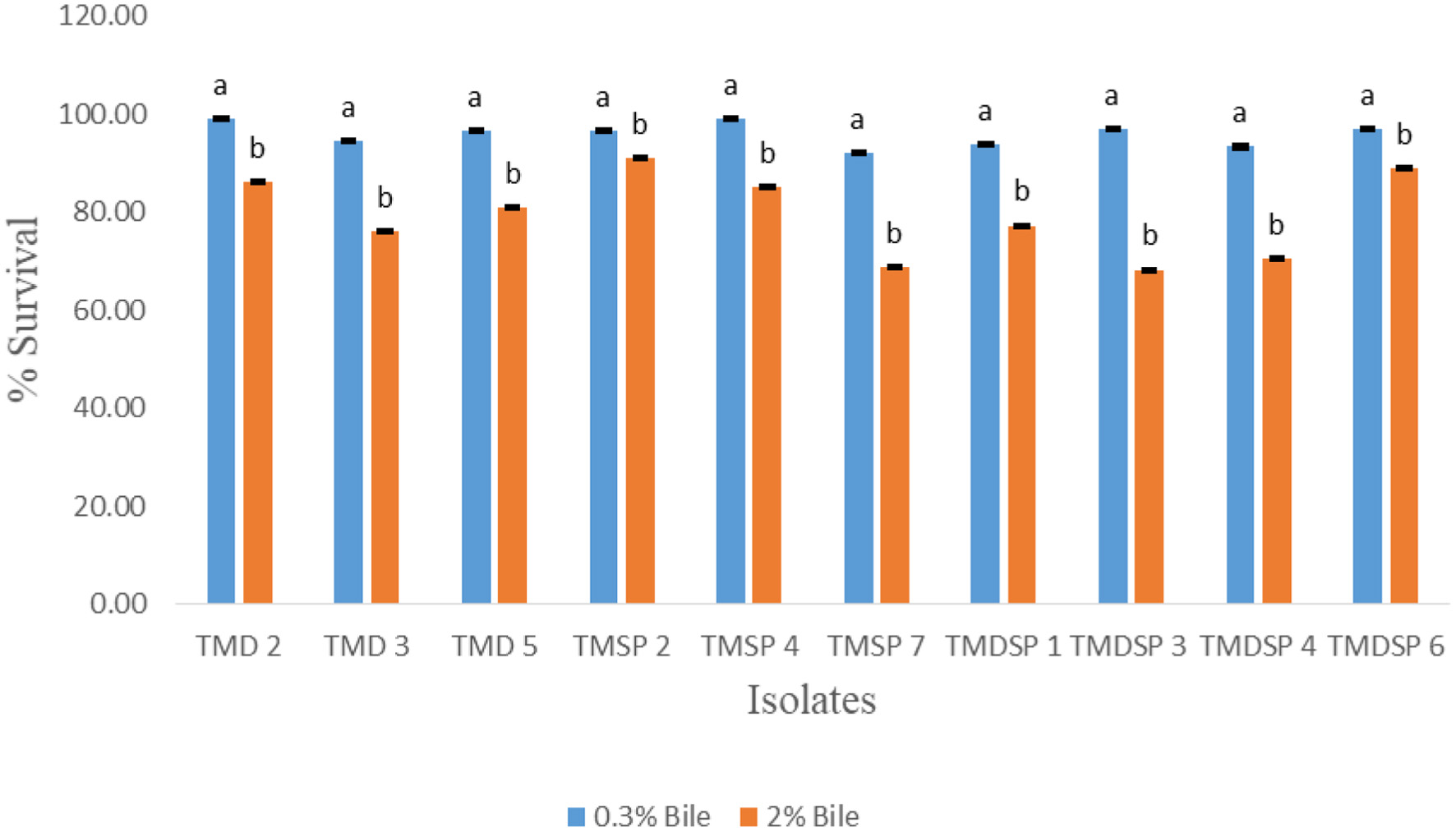 Click for large image | Figure 2. Percentage survival of LAB isolates at different bile salt concentrations after 3 hours of exposure (n = 3). Data are presented as mean ± SEM (n = 3). Error bars denote ± SEM. Survival at 0.3% versus 2% bile salt was compared for each isolate using Student’s t-test; survival differed significantly between the two concentrations for every isolate (p < 0.001). Key: TMD (2, 3 and 5) = Bacterial isolates from Tiger nut-Millet beverage sweetened with Date fruit; TMSP (2, 4, and 7) = Bacterial Isolates from Tiger nut-Millet beverage sweetened with Sweet potato; TMDSP (1, 3, 4 and 6) = Bacterial Isolates from Tiger nut-Millet beverage sweetened with Date fruit and Sweet potato. |
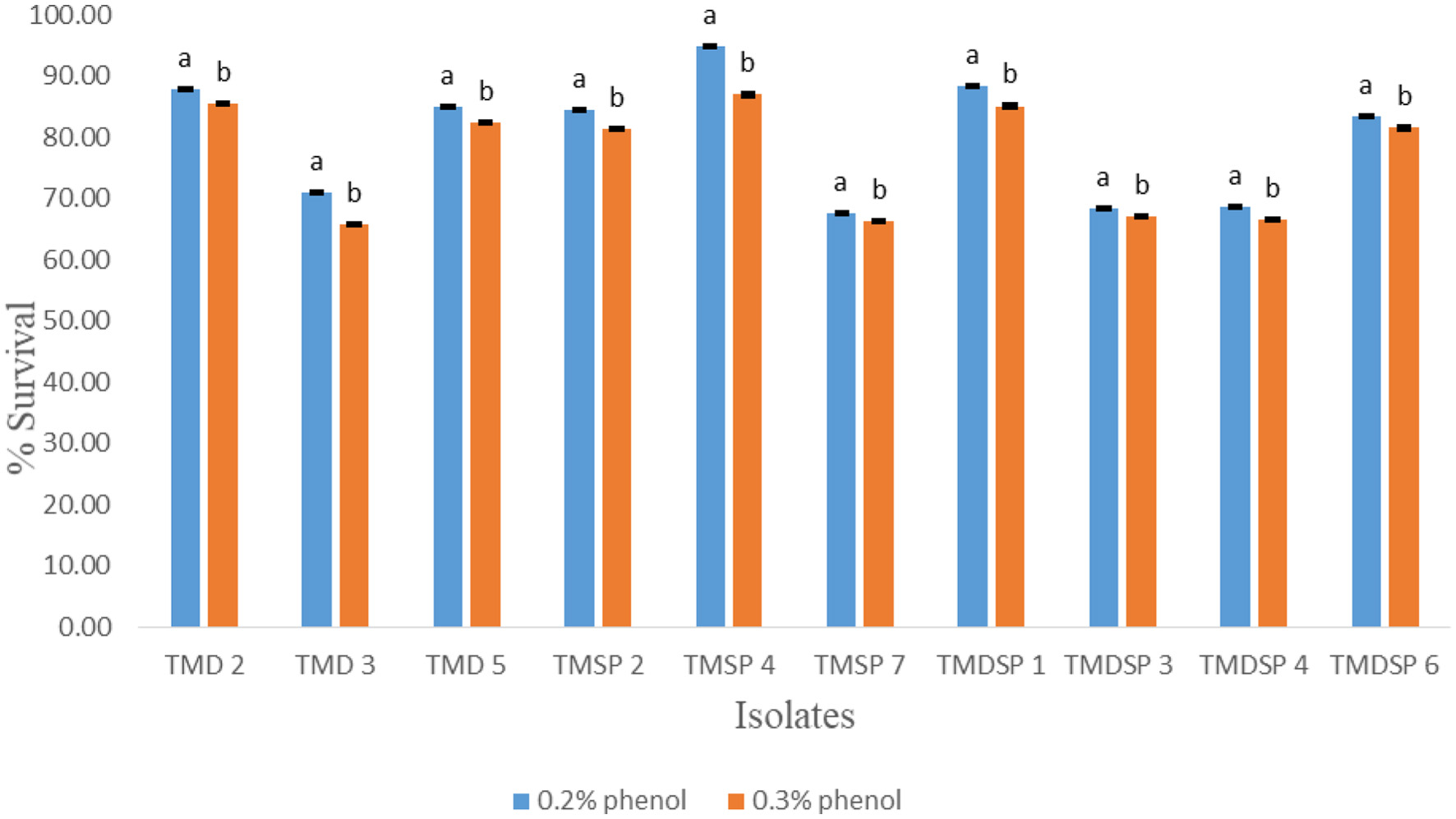 Click for large image | Figure 3. Percentage survival of LAB isolates at different phenol concentrations after 3 hours of exposure (n = 3). Data are presented as mean ± SEM (n = 3). Error bars denote ± SEM. Survival at 0.2% versus 0.3% phenol was compared for each isolate using Student’s t-test; survival differed significantly between the two concentrations for every isolate (p < 0.001). Key: TMD (2, 3 and 5) = Bacterial isolates from Tiger nut-Millet beverage sweetened with Date fruit; TMSP (2, 4, and 7) = Bacterial Isolates from Tiger nut-Millet beverage sweetened with Sweet potato; TMDSP (1, 3, 4 and 6) = Bacterial Isolates from Tiger nut-Millet beverage sweetened with Date fruit and Sweet potato. |
3.5. Identification of LAB using API 50 CHL system
The identification results obtained using the API 50 CHL system are presented in Table 3. Lactobacillus plantarum was the predominant species identified among the isolates, with identification confidence ranging from 74.4% to 99.9%. Isolate TMSP2 was identified as Lactobacillus brevis with 99.7% confidence, whereas isolate TMDSP6 was identified as Lactobacillus pentosus with 69.5% confidence. Overall, the API results indicated that Lactobacillus species predominated during fermentation of the tiger nut-millet beverages.
Click to view | Table 3. Identification of isolated LAB using the standard API 50 CHL system |
3.6. Antibiotic susceptibility profile of selected probiotic LAB
The antibiotic susceptibility profiles of the selected probiotic LAB isolates are presented in Table 4. Most isolates were susceptible to ampicillin, cotrimoxazole, gentamicin, erythromycin, tetracycline, vancomycin, and ciprofloxacin, exhibiting inhibition zones of ≥21 mm. An exception was isolate TMSP7, which showed resistance to ciprofloxacin. Conversely, all isolates exhibited resistance to meropenem, Augmentin, ceftazidime, cefuroxime, and cephalexin. The observed susceptibility to commonly used antibiotics, together with resistance to selected β-lactam antibiotics, indicates distinct antibiotic susceptibility patterns among the isolates.
Click to view | Table 4. Antibiotic susceptibility profile of selected probiotic LAB isolates |
3.7. Antibacterial activities of selected probiotic LAB
The antibacterial activities of the selected LAB isolates against clinically important bacterial pathogens are shown in Table 5. The isolates exhibited varying degrees of antibacterial activity against the test organisms. The strongest inhibitory activity was observed for isolate TMD5 against Klebsiella pneumoniae, producing an inhibition zone of 23 mm. Several isolates also demonstrated strong inhibition against Escherichia coli, Pseudomonas aeruginosa, Bacillus cereus, and Staphylococcus aureus, whereas a few isolates showed no detectable antibacterial activity against specific pathogens.
Click to view | Table 5. Antibacterial activities of selected probiotic LAB isolates |
3.8. Molecular identification of selected LAB by 16S rRNA gene sequencing
The molecular identification of the selected LAB isolates based on 16S rRNA gene sequencing is presented in Table 6. Most isolates belonged to the genus Lactiplantibacillus, while one isolate was identified as Leuconostoc, both of which are commonly associated with plant-based fermentations. Isolates TMD2 and TMD5 were identified as Lactiplantibacillus plantarum with sequence similarities of 98.39% and 96.89%, respectively. TMDSP1 and TMDSP6 were identified as Lactiplantibacillus pentosus, exhibiting sequence similarities of 98.68% and 99.73%, respectively. In addition, isolate TMSP2 showed 99.61% sequence similarity with Leuconostoc mesenteroides.
Click to view | Table 6. 16S rRNA gene sequence identification of isolated LAB strains |
| 4. Discussion | ▴Top |
The bacterial growth patterns observed during fermentation indicated enhanced fermentative activity in the sweet potato-enriched formulations. Under favorable fermentation conditions and with sufficient carbohydrate availability, the metabolic activity and proliferation of LAB are expected to increase, consistent with the gradual rise in LAB counts observed in this study (Gallina and Barbosa, 2022). The higher LAB populations detected in sweet potato-containing samples may be associated with their increased availability of fermentable sugars, which promote acid production and bacterial growth (Albay et al., 2025). A study by Rahman et al. (2026) reported successful fermentation of sugars, fructose, sucrose, and lactose by isolated Lactobacillus spp. isolated from locally fermented dairy products in Dhaka city, Bangladesh, which supports their ability to break down organic substrates to produce organic acids, such as acetic and lactic acids, ethanol, and carbon dioxide. The findings of this study were consistent with those reported by Ozabor et al. (2026), who described isolated LAB colonies with smooth or rough surfaces, flat to raised elevations, white or cream pigmentation, and entire, lobate, or undulate margins from ogi, a traditional Nigerian cereal-based fermented food. The biochemical and morphological characteristics of the isolates were consistent with typical LAB features, suggesting the presence of a mixed LAB population comprising genera such as Lactiplantibacillus, Pediococcus, Leuconostoc, and Enterococcus, which are frequently reported in plant-based fermented beverages (Adesulu-Dahunsi et al., 2021). The selection of colonies based on distinctive morphological features, such as color, shape, size, and surface characteristics, before purification and molecular sequencing for the characterization of Lacticaseibacillus paracasei A35 and Lactococcus lactis E24 from Chinese Kefir by Li et al. (2026) aligned with the preliminary screening for LAB employed in this study.
The physiological characteristics of the isolates indicated diverse metabolic capabilities associated with both homofermentative and heterofermentative pathways (Rahman et al., 2026). The catalase-negative reaction and fermentative nature of the isolates further confirmed their classification as LAB (Kouadio et al., 2024). Similarly, Asjad et al. (2025) reported that all LAB strains isolated from fermented foods were catalase-negative. The absence of hydrogen sulfide (H2S) production among the isolates is considered a desirable characteristic, as H2S-producing microorganisms are generally associated with undesirable effects in fermented food systems (Lee et al., 2024). A study by Khushboo et al. (2023) also reported the absence of H2S production among the LAB sourced from fermented and non-fermented foods, such as curd, milk, pickle, and wheat dough. Differences in temperature-dependent growth patterns indicate strain-specific adaptability, with some isolates exhibiting improved tolerance to elevated temperatures. Growth at 15°C suggests psychrotolerance, which may enhance their suitability for refrigerated storage conditions (Liu et al., 2017). In the present study, all bacterial isolates grew at 15°C, whereas only a few isolates (22.2%) failed to grow at 45°C. The ability of LAB to survive over a wide temperature range highlights their adaptability during fermentation, particularly under the fluctuating temperatures characteristic of traditional fermentation processes. The survival of all the isolates at 15°C suggests the presence of psychrotolerant LAB strains, which can function in enhancing the quality and stability of cereal-based fermentation. Evaluating LAB at both low and high temperatures is essential for optimizing fermentation processes, improving food preservation, understanding microbial ecology, and enhancing industrial and biotechnological applications (Bindu and Lakshmidevi, 2021). The results obtained in this study were similar to the findings of Nassanga et al. (2026), who reported that 97.7% of LAB isolates grew at 15°C. Compared with previous studies (Mashau et al., 2020; Nassanga et al., 2026), the present study recorded 100% growth of LAB isolates at 15°C, indicating the presence of psychrotolerant strains, whereas 77.7% of the isolates grew at 45°C, suggesting thermotolerance. All the isolates exhibited growth at 4 and 6.5% NaCl, although 11.1% of the bacterial isolates failed to grow at 8% NaCl. Growth at 4% and 6.5% NaCl demonstrated the isolates’ ability to tolerate osmotic stress and remain viable during fermentation. The variations in the salt tolerance ability of the LAB were dissimilar to the findings of Nassanga et al. (2026), who reported no growth of 6.7% and 9.1% LAB isolated from kwete, a maize-based fermented beverage, at 6.5% and 4% NaCl, respectively. This suggests that LAB from fermented foods may be susceptible to higher salt concentrations, which could influence their viability during prolonged fermentation or shelf-ability. Similarly, Khushboo et al. (2023) reported that all LAB strains exhibited high survival at 2% NaCl, whereas only six strains showed reduced survival at 6% NaCl. Beyond this concentration, only strain BM2 maintained a high level of salt tolerance at 10% NaCl. The results from this study agree with the findings of Isono et al. (1994), who reported the ability of four LAB isolated from fermented milk to survive at a concentration of 4% NaCl, and only one isolate exhibited survival at 6.5% NaCl supplementation in the growth medium.
Tolerance to gastrointestinal stress conditions is a fundamental criterion for evaluating potential probiotic microorganisms (Khushboo et al., 2023). Acid tolerance is a key characteristic of probiotic LAB. In the present study, all isolates survived at pH 3, indicating strong resistance to acidic conditions. LAB growth at low pH (acidic) can contribute to their survival in the fermentation medium, suppress spoilage microorganisms, and improve probiotic survival and shelf-life of cereal-based fermented foods, enhancing both the preservation and sensory attributes (Borthakur et al., 2026; Nassanga et al., 2026). The survival of LAB at low pH can help identify LAB strains with greater resistance to gastric acidity, which are viable and effective as probiotics in efficient fermentation processes for improved quality of fermented products and consistency (Nassanga et al., 2026). Optimization of process parameters to determine LAB survival at varied pH can help ascertain the functionalities to ensure improved fermented food quality and safety (Lu et al., 2022). The ability of all LAB isolates to grow at pH 3 was consistent with the findings of Zhu et al. (2022) and Nassanga et al. (2026). The predominance of Lactiplantibacillus plantarum in this study agrees with previous reports describing its frequent occurrence in cereal- and plant-based fermented foods due to its metabolic flexibility, probiotic potential, and ability to withstand osmotic and acidic stress (Seddik et al., 2017; Katiku et al., 2022). A study by Simatende et al. (2019) reported the dominant LAB, such as Lactococcus lactis, Leuconostoc mesenteroides, Lb. plantarum, Lb. paracasei, and Lb. brevis in emasi and Lb. plantarum, L. mesenteroides, Lb. fermentum, Lb. brevis, Wessella confusa, Lb. acidophilus and Lb. lactis in emahewu, which contribute to the dietary and nutritional quality of the non-alcoholic lactic acid fermented traditional foods produced for both children and adults in Eswatini. Similarly, the detection of Levilactobacillus brevis is consistent with previous studies highlighting its contribution to flavor development and production of antimicrobial metabolites in fermented plant-based products (Wuyts et al., 2018; Nguyen et al., 2025). Although identified with lower confidence, Lactiplantibacillus pentosus remains an important species because of its ecological adaptability and reported probiotic characteristics in complex fermentation systems (Abriouel et al., 2024). Comparatively, isolation and characterization of dominant LAB in the genera Lactobacillus and Leuconostoc from fermented foods with exceptional probiotic potential for functional food development have been documented (Yao et al., 2025; Zakari et al., 2025; Sliti et al., 2026).
The high survival rates recorded under acidic conditions suggest that the LAB isolates possess effective acid tolerance mechanisms (Khushboo et al., 2023). Previous studies have demonstrated the resistance of Leuconostoc mesenteroides and Lactiplantibacillus plantarum to acid stress through mechanisms such as membrane fatty acid modification, synthesis of stress-response proteins, and activation of F0F1-ATPase systems, which contribute to intracellular pH regulation (Zheng et al., 2020; Lee et al., 2024).
Bile tolerance is another important characteristic for probiotic selection because bile salts in the small intestine can damage bacterial membranes, disrupt cellular proteins, and induce oxidative stress (Khushboo et al., 2023). The ability of probiotic bacteria to adapt to bile stress in the small intestine is essential for successful intestinal colonization (Sliti et al., 2026). During digestion, bile is released from the gallbladder into the duodenum, where it facilitates lipid emulsification and promotes fat digestion and nutrient absorption (Kiran et al., 2025). Under normal physiological conditions, bile concentrations in the human intestine are between 40 mM and < 1 mM (equivalent to 2 % and 0.05 %, respectively) (Sliti et al., 2026). The survival ability of the isolates under bile exposure indicates their potential to withstand intestinal conditions. This tolerance may be associated with adaptive mechanisms reported in Lactiplantibacillus plantarum, including membrane modification and bile salt hydrolase (BSH) activity, which reduce bile-induced cellular damage (Zheng et al., 2020; Ruiz et al., 2013). In this study, all the LAB isolates showed a high survival rate >86% at 0.3% bile concentrations. The results obtained from this study align with the findings of Sliti et al. (2026), who reported survival rates between 51.61 and 98.71% of Leuconostoc strains at varied bile concentrations of 0.05 % and 0.08 %, respectively. The resistance of LAB to bile salts can be facilitated by the production of bile salt hydrolase, the action of efflux pumps, and the intrinsic physiological properties of the cell (Bustos and Taranto, 2025). However, higher concentrations of bile salts can function as antimicrobials, which disrupt bacterial membrane phospholipids and damage lipid bilayers, leading to cell lysis and death.
Resistance to phenolic compounds is also relevant in probiotic evaluation because phenolic metabolites produced in the gastrointestinal tract can negatively affect bacterial membranes and intracellular components (Pacheco-Ordaz et al., 2018; Roslina et al., 2021). The ability of the LAB isolates to survive phenol exposure indicates the presence of adaptive mechanisms that enhance persistence under gastrointestinal conditions (Islam et al., 2026). These mechanisms may include enhanced membrane stability, efflux activity, and cellular stress responses. Similar phenol tolerance has been reported among Lactiplantibacillus plantarum and Pediococcus acidilactici strains, supporting their potential application as functional probiotic cultures (Zhang et al., 2018).
The antibiotic susceptibility profile of the isolates revealed consistent resistance to ceftazidime, cefuroxime, Augmentin, meropenem, and cephalexin. Such resistance patterns may reflect intrinsic resistance characteristics commonly observed among LAB, including limited antibiotic uptake due to cell wall structure, chromosomal resistance determinants, or efflux mechanisms (Gueimonde et al., 2013; Seyirt et al., 2023). Similar observations have been reported for LAB isolated from fermented foods, where susceptibility to clinically relevant antibiotics supports their potential safety for probiotic applications (Saci et al., 2025). Importantly, the absence of tetracycline resistance among the isolates represents a favorable biosafety characteristic because tetracycline resistance genes are frequently associated with horizontal transfer among gastrointestinal microorganisms (Zhou et al., 2022).
The antagonistic activity of probiotic LAB against pathogenic microorganisms is an important functional characteristic that supports their application in fermented foods and probiotic formulations (Choi et al., 2018). LAB inhibit pathogens through multiple mechanisms, including organic acid production, bacteriocin secretion, competitive exclusion, nutrient competition, and modulation of host immune responses (Malik et al., 2021). According to Gueimonde et al. (2013), probiotic strains should lack transferable antibiotic resistance determinants to minimize the risk of resistance dissemination within the gastrointestinal microbiota.
Among the evaluated isolates, TMSP2 and TMDSP6 demonstrated strong probiotic potential due to their broad-spectrum antimicrobial activity against tested pathogens. TMSP2 showed the highest inhibition activity against Escherichia coli and Staphylococcus aureus (20 mm inhibition zone), suggesting the production of antimicrobial compounds, such as organic acids, hydrogen peroxide, or bacteriocins (Aguilar-Toalá et al., 2018; Zommiti et al., 2018). Similarly, TMD3 and TMSP4 exhibited notable inhibition against Pseudomonas aeruginosa (19 mm and 18 mm, respectively), whereas TMD5 and TMD2 demonstrated strong activity against Klebsiella pneumoniae (23 mm and 20 mm, respectively). These findings support previous reports that LAB exert antimicrobial effects through acidification, nutrient depletion, and production of antimicrobial peptides, highlighting their potential use in functional foods and microbial-based therapies (Binda et al., 2020; Girma and Aemiro, 2021). Furthermore, Sliti et al. (2026) reported antimicrobial activities of Leuconostoc strains RP1, RP3, and SS5 against S. typhimurium, S. enterica, B. cereus, and E. coli, which can be due to their ability in the production of metabolic compounds, such as bacteriocins, hydrogen peroxide, organic acids, and other active antimicrobial metabolites (Khubber et al., 2022).
The molecular identification results were consistent with previous reports showing that Leuconostoc, Lactobacillus, and Lactiplantibacillus species are predominant microorganisms in cereal- and tuber-based fermented foods (Tamene et al., 2019; Kouadio et al., 2024; Abdi et al., 2025). These microorganisms contribute to acidification, flavor development, and functional properties, including stress tolerance and gastrointestinal survival (Zheng et al., 2020; Zhang et al., 2025). However, the relatively low similarity value (90.43%) observed for isolate TMSP4 suggests that it may represent a genetically distinct strain or a microorganism not typically associated with fermented food systems. Further molecular characterization using advanced identification approaches, such as whole-genome sequencing or multilocus sequence analysis, would be required to confirm its taxonomic position.
| 5. Conclusions | ▴Top |
The fermented tiger nut–millet beverage contained dominant LAB belonging to the genera Lactobacillus and Lactiplantibacillus, highlighting their important roles in fermentation and potential probiotic functionality. The adaptability and performance of these LAB isolates during fermentation demonstrate their ability to tolerate simulated gastrointestinal conditions, including acid, bile, and phenolic stress. Their antibacterial activity against selected food-borne pathogens further supports their potential contribution to food safety. Therefore, the fermented tiger nut–millet beverage represents a promising non-dairy probiotic food candidate for the development of functional foods and nutraceutical products.
| Supplementary Material | ▴Top |
Table S1. Cultural and morphological characteristics of LAB isolated from naturally sweetened spicy fermented tiger nut-Millet beverage.
Acknowledgments
The authors gratefully acknowledge the support received from the affiliated institutions.
Funding
This research received no funding.
Conflict of interest
The authors have no competing interests to declare that are relevant to the content of this article.
| References | ▴Top |