| Journal of Food Bioactives, ISSN 2637-8752 print, 2637-8779 online |
| Journal website www.isnff-jfb.com |
Review
Volume 33, March 2026, pages 1-9
Upcycling for a sustainable food future: turning waste into high-value products for nutrition and health
Cesarettin Alasalvara, *, Kazuo Miyashitab, Dejian Huangc, Nandika Bandarad, e, Zhuliang Tanf, g, Fereidoon Shahidih
aFood Technology Research Group, TÜBİTAK Marmara Research Center, Gebze/Kocaeli, Türkiye
bGraduate School of Health and Nutritional Sciences, Hokkaido Bunkyo University, Hokkaido, Japan
cDepartment of Food Science and Technology, National University of Singapore (NUS), Singapore
dDepartment of Food and Human Nutritional Sciences, Faculty of Agricultural and Food Sciences, University of Manitoba, Winnipeg, MB, Canada
eRichardson Centre for Food Technology and Research (RCFTR), University of Manitoba, Winnipeg, MB, Canada
fSubait Inc, Dartmouth, NS, Canada
gEnterprise Research Institute of Zhejiang Industrial Group Co. Ltd., Zhejiang, China
hDepartment of Human Biosciences, Memorial University, St. John’s, NL, Canada
*Corresponding author: Cesarettin Alasalvar, Food Technology Research Group, TÜBİTAK Marmara Research Center, Gebze/Kocaeli, Türkiye. E-mail: cesarettin.alasalvar@tubitak.gov.tr
DOI: 10.26599/JFB.2026.95033434
Received: February 10, 2026
Revised received & accepted: February 26, 2026
| Abstract | ▴Top |
Upcycling and zero-waste food processing are transforming how we think about leftovers from farms, fisheries, and food production. Instead of letting nutrient-rich coproducts go to waste, new sustainable technologies - such as smart fermentation, green extraction methods, and innovative biotransformation - can turn them into valuable ingredients for healthy foods, supplements, and even animal feed. These materials often contain proteins, fibers, beneficial fats, and health-promoting bioactive compounds. By reclaiming them, we not only reduce landfill use and environmental impact but also strengthen food security, support local economies, and move closer to a truly circular food system. This review highlights sustainable strategies for valorizing agricultural, oilseed, and marine coproducts into high-value functional ingredients and industrial materials, thereby advancing the transition toward a zero-waste, circular bioeconomy.
Keywords: Upcycling; Coproducts; Sustainable transformation; Bioactives; Functional food ingredients; Circular economy
| 1. Introduction | ▴Top |
Food processing provides crucial advantages, ranging from enhanced safety and extended shelf life to improved nutrition and waste reduction. A prime example is upcycling foods, a process that converts byproducts and/or coproducts from agriculture, fisheries, and food manufacturing into high-value ingredients with significant health benefits. About one-third of the food produced globally for human consumption is lost or wasted each year (FAO, 2011). Currently, over 13% of food is lost globally in the supply chain between harvest and the retail stage. Furthermore, food waste at the retail, food service, and household levels accounts for another 19%, according to food waste index report (Food Waste Index Report, 2024). Figure 1 illustrates the percentages of food loss across the supply chain. This does not consider discard of good food due to “best before date” by consumers.
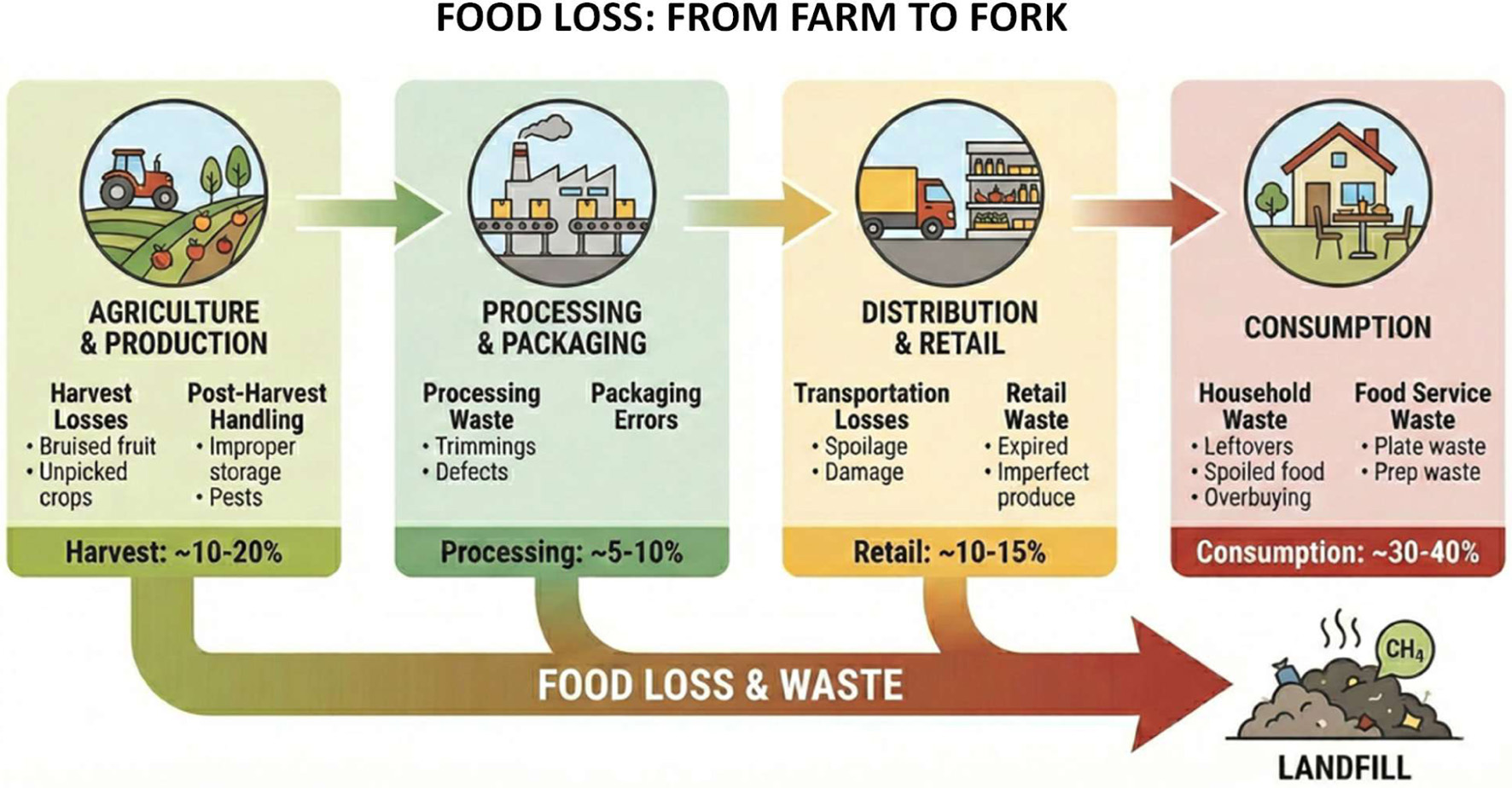 Click for large image | Figure 1. Percentage of food loss from farm to fork. Source: Data compiled from FAO (2011) and Food Waste Index Report (2024). |
Therefore, reducing food loss and waste is crucial for improving food security and nutrition, promoting efficient use of resources, protecting the environment, and fostering a more equitable distribution of food resources globally.
Large quantities of coproducts - namely fruit seeds, peels, pomace, vegetable scraps, skins, oilseed cakes, hulls, and husks, fish skin and head, bones, and shells, among others - are available for upcycling. These coproducts are rich sources of diverse phenolic compounds, other phytochemicals, fiber, prebiotics, fat-soluble bioactives, including omega-3 fatty acids, proteins, biopeptides, vitamins, minerals, and polysaccharides, among others. These bioactive components can be recovered using various sustainable fermentation and green extraction technologies as well as innovative biotransformation for use in food, nutraceutical, agriceutical, and pharmaceutical applications. We must harness these valuable resources to develop value-added products that promote better health and well-being. This review highlights sustainable strategies for valorizing agricultural, aquatic, and marine coproducts into high-value functional ingredients and industrial materials, thereby advancing the transition toward a zero-waste, circular bioeconomy.
| 2. Upcycling food coproducts for a sustainable food future | ▴Top |
2.1. Upcycling of food processing discards and generation of functional food ingredients and nutraceuticals
Food processing, defined as the transformation of agricultural/aquatic products into foods, or of one form of food into another. During this operation, considerable amounts of waste, ranging from 30 to 70%, are produced. These discards are potential sources of upcycled secondary products or byproducts/coproducts that are important in the bioeconomy. Sources of food processing discards are from agri-food sources such as shells, seeds, peels, husk, and pomace; those from marine origin such as fish bones, skins, shells, viscera, and alike; or from industrial sources like lignocellulosic biomass, spent yeast, and oilseed cakes, among others (Shahidi, 2007; Tomar et al., 2023).
Before going to any details, it is important to note that food processing saves lives by eliminating microorganisms, inactivating enzymes that may lead to food quality deterioration and alike. While upcycling offers immense potential, ensuring the safety and sanitation of recovered food coproducts is paramount. Since these materials originate from diverse processing side-streams, implementing rigorous microbiological and chemical safety protocols is necessary. Standardized sanitation practices guarantee that these sustainable, value-added ingredients meet strict regulatory standards and remain safe for human consumption.
The notion of food processing and processed foods are unhealthy was introduced by the ill-defined ultra-processed foods and NOVA classification that although has some valid points, has caused considerable confusion in that mistakenly classifies yogurt with fruits in it or UHT milk with a bit of chocolate in it as unhealthy, contrary to any scientific validity (Medin et al., 2025).
Food processing generates a large volume of discards that serve as rich sources of bioactive compounds, nutraceuticals, functional food ingredients, and dietary supplement with healthful properties. The benefits of upcycling and zero-waste processing also impact the environment through landfill and ocean dumping and provide economic benefits by creating jobs and other social effects.
Among the processing discards, phenolic and polyphenolic compounds, are found in high amounts in the skin of cereals, legumes, and oilseeds as well as the skin and seeds of fruits, among other parts of plants and tubers (Santhiravel and Shahidi, 2026). Often the leaves have a higher content of phenolic compounds (Hossain and Shahidi, 2023a) than the fruits and pomace after juicing or upon wine production (Table 1). They are present in plants for serving as anti-herbivory, preventing attack by microorganisms and predators and protecting the plant from stress under sunlight, participating in wound-healing and attracting pollinators. Therefore, we are beneficiary of their effects upon consumption, such as antioxidants, among many other mechanisms by which they render their health benefits.
 Click to view | Table 1. Phenolic and polyphenolic compounds in grape juice, skin, and seeds (mg/kg) |
Phenolics occur in food in the free, soluble ester, and glycosides as well as insoluble-bound forms. While they are extracted from food when in the soluble form, the insoluble-bound ones need to be released from the food matrix and cell wall components such as pectin, cellulose, arabinoxylans, and structural proteins. Thus, the latter type must be considered in any accurate determination. The release could be done via use of solvents, enzymes, or fermentation, among others (Hossain and Shahidi, 2023b).
Phenolics from processing discards are often colored such as those in pomegranate skin and pomace and skin of grapes used in juicing and wine production, skin of pearl and red onions, and skin of purple potatoes. They also render benefits such as antimicrobial effects. Some phenolics from tree nuts are also important in providing health benefits. For example, hard shells of hazelnuts contain anti-cancer, taxanes, similar to those in Pacific Yew (Hoffman and Shahidi, 2009).
In marine resources, fish processing discards are rich in proteins, including collagen, and peptides from the left-over flesh and skin, bones as a source of calcium and highly unsaturated lipids. Meanwhile, shellfish discards are an excellent source of chitin, chitosan, glucosamine, and carotenoids, among others (Shahidi, 2007). Hydrolysates from proteins and collagen have several healthful effects, including antihypertensive properties and antioxidant potential. Meanwhile, shellfish such as shrimp also contain phenolic antioxidants that were recently explored (Onodenalore et al., 2024). More recently, we found phenolic and polyphenolic compounds in sea cucumber and its processing discards with antioxidant, anticancer, and anti-hyperglycemic activities (Hossain et al, 2022).
Based on the above summary, food processing discards may be considered a rich source of bioactive compounds with multiple bioactivities and valorization potential for use as functional food ingredients and nutraceuticals.
2.2. Sustainable agriceuticals: reclaiming protein and phytochemicals from coproducts of agricultural and food industry
The global food system is currently facing significant challenges in meeting nutritional demands while also minimizing waste and environmental impact. By 2050, food production must increase by 60% to adequately nourish an expected world population of 10 billion. However, existing systems contribute to substantial food waste, with global losses estimated to exceed US$2.6 trillion annually (FAO, 2025a). Additionally, societies are dealing with rising issues related to healthy aging and nutritional security. In this context, sustainable agriceuticals offer a promising strategy to address these interconnected challenges. Agriceuticals is a blend of agriculture + pharmaceuticals/nutraceuticals) that refers to bioactive compounds or health-promoting substances derived from agricultural crops that provide medicinal or therapeutic benefits. It is a subclass of nutraceuticals. Instead of viewing food processing residues as waste, this method recognizes these materials as valuable sources of proteins, fibers, and bioactive compounds that can be recovered and transformed into functional food ingredients. Figure 2 shows some new product development and bioactive compounds from sustainable agriceuticals.
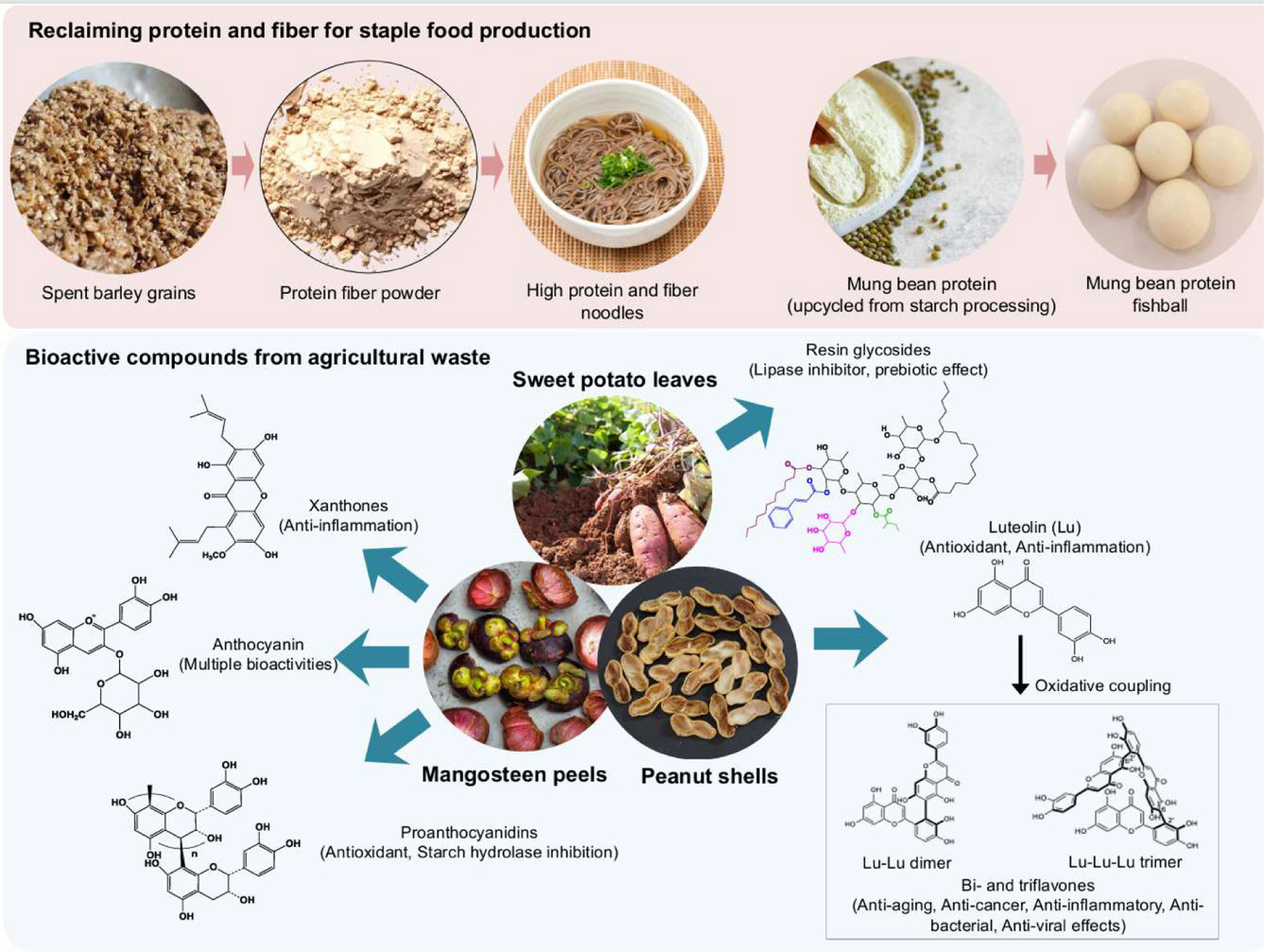 Click for large image | Figure 2. Highlights from sustainable agriceuticals In the upper panel, proteins and fiber were reclaimed from spent barley grains (SBG) to produce staple foods, such as high-protein, high-fiber noodles (Neo et al., 2025). Additionally, mung bean proteins were upcycled and converted into vegan fish balls (Vijayan et al., 2025). The lower panel demonstrates how various phytochemicals can be extracted using green technology for nutraceutical applications. Resin glycosides were extracted from aerial parts of sweet potato plants (Toy et al., 2022), xanthones and polyphenolics were extracted from mangosteen peels (Zhan et al., 2025), and luteolins found in peanut shells (Kim et al., 2023) were converted by food grade oxidative coupling reactions to its dimers and trimers (Yang et. al., 2022). |
2.2.1. Protein recovery from food processing coproducts
Traditional food processing operations generate large quantities of protein-rich coproducts that are often underutilized. For instance, brewing and distilling processes yield spent barley grains, spent red sorghum meals, and dried distillers’ grains (He et al., 2023). These coproducts typically contain 20–30% protein along with significant amounts of dietary fiber. Oil extraction from crops, such as sunflower, peanut, soybean, pumpkin, rapeseed, and palm kernel, also produces protein-rich residues, which are primarily redirected to animal feed despite their potential for human nutrition. Additionally, industrial starch production creates protein-containing coproducts during washing, crushing, filtering, and separation processes, which primarily focus on starch recovery while discarding other valuable nutrients. Globally, approximately 28 million tons of spent barley grains are generated each year, representing a substantial untapped source of protein (FAO, 2025b). Advanced fractionation technologies now allow for the separation of these coproducts into high-value components, including food-grade proteins, soluble fibers such as beta-glucan, and insoluble dietary fibers. Recent innovations have also explored the use of psyllium husk soluble fiber as a starch replacement in noodles made from spent brewers’ grains. This approach has demonstrated improved textural properties and nutritional profiles (Neo et al., 2025). The high protein content supports muscle maintenance and satiety, the elevated fiber promotes digestive health and metabolic regulation, and minimal digestible carbohydrates helps preventing glycemic spikes (Kassa et al., 2024).
Conventional industrial processing of mung beans primarily focuses on starch extraction, leaving protein-rich residues that contain approximately 24% protein and are used in animal feed. However, novel zero-waste processing technologies facilitate the simultaneous recovery of both starch and protein while preserving desirable color and functional properties in each fraction (Vijayan et al., 2024). These methods are scalable, ranging from central kitchens to large-scale industrial production, and they target a mung bean starch market valued at at approximately USD 300 Million in 2024 (Verified Market Reports, 2025). The recovered protein demonstrates good solubility, emulsification capacity, and gelation properties, which enable incorporation into diverse food products. Furthermore, transglutaminase treatment has been shown to enhance the gelation and functional properties of mung bean protein isolates, thereby expanding their potential applications in food systems.
2.2.2. Reclaiming phytochemicals from agri-food coproducts
Beyond nutrient recovery, sustainable agriceuticals encompass the extraction and synthesis of bioactive compounds. For example, flavones, such as luteolin can be isolated from coproducts such as peanut shells. Flavone dimers and trimers are a class of compounds known for their diverse health-promoting activities. These compounds naturally occur in gymnosperms, angiosperms, bryophytes, and pteridophytes, with examples such as gingentin, robustaflavone, dicranolomin, and amentoflavone.
Traditional synthesis methods often require metal catalysts, halogenated starting materials, high temperatures, and multi-step procedures that generate wasteful coproducts. In contrast, oxygen-mediated oxidative coupling in alkaline water presents an environmentally friendly, one-pot reaction system that produces complex flavonoid structures. This method offers several advantages, including higher yields, greater regioselectivity, functional group compatibility, and safety for food-grade applications (Yang et al., 2022). Consequently, this approach enables the synthesis of both naturally occurring and novel unnatural biflavones and triflavones, opening avenues for diverse therapeutic applications. Notably, this technique represents a significant advancement in green chemistry for food bioactive synthesis, successfully achieving hetero-coupled biflavones through oxygen-mediated reactions under mild conditions without the use of toxic reagents. Extensive compound libraries have been developed that include variations in hydroxylation patterns across different positions of the flavone scaffold (Zheng et al., 2025). These compounds exhibit various bioactivities, such as anti-aging, anti-cancer, anti-inflammatory, antibacterial, and antiviral properties against dengue and coronavirus. They also show therapeutic potential for non-alcoholic fatty liver disease and norovirus infections. Additionally, three-dimensional quantitative structure-activity relationship (3D-QSAR) modelling has facilitated the prediction and optimization of antioxidant activities, enabling the rational design of biflavones with enhanced bioactivity profiles. These work opens up new use of flavones reclaimed from agricultural coproducts.
Resin glycosides extracted from agricultural coproducts have also demonstrated potent lipase inhibitor activity, suggesting promising applications in body weight management (Toy et al., 2022) based on a mice model study (Liu et al., 2025). Specifically, resin glycosides isolated from the aerial parts of sweet potato (Ipomoea batatas) coproducts exemplify a valuable method for upcycling agricultural waste into functional ingredients that combat obesity.
On the other hand, the alkaline solubilization and acid precipitation (ASAP) method is effective for isolating bioactive xanthones from mangosteen pericarps, a significant coproduct of tropical fruit processing (Zhan et al., 2025). This sustainable extraction technique efficiently recovers compounds with high bioactivity while avoiding harsh organic solvents. Thus, it showcases the broader applicability of green chemistry approaches to valorizing diverse agricultural coproducts beyond grain and legume processing.
Overall, these advances demonstrate that food industry side streams should not be viewed merely as waste requiring disposal but rather as valuable resources for manufacturing health-promoting foods and bioactive ingredients. As global pressures on food systems intensify, sustainable agriceuticals will play an increasingly vital role in developing efficient, nutritious, and environmentally responsible food production systems.
2.3. Upcycling oilseed processing industry coproducts for functional ingredients
Oilseed crops such as canola (Brassica napus), sunflower (Helianthus annuus L.), and hemp (Cannabis sativa) represent attractive alternative sources of amino acids due to their high protein content and widespread availability as coproducts of oil extraction. These crops are primarily cultivated for oil, and the residual meals are currently used mainly in animal feed, often with limited value addition. Expanding higher-value applications for these protein-rich coproducts is, therefore, essential to improve the overall sustainability of oilseed processing industries (Bandara et al., 2018). Global canola (rapeseed) production has expanded substantially over recent decades, making it one of the world’s most important oilseeds, with major producing regions such as Canada, China, and the European Union (Canola Council of Canada, 2026). Canola meal, a coproduct of canola oil production, contains approximately 36–40% protein and is abundant in essential amino acids such as lysine and methionine (Cháirez-Jiménez et al., 2023), making it a strong alternative to animal-derived protein sources. Hemp is defined as a Cannabis sativa L. with tetrahydrocannabinol (THC) in the flowers and leaves of the inflorescence, not more than the regulated maximum limits. Traditionally, hemp is used for many applications, including oil processing (Kaur and Kander, 2023). Hemp meal contains about 25–30% protein and is particularly rich in arginine and glutamic acid, amino acids that play key roles in cellular metabolism in bioreactor systems (El-Sohaimy et al., 2022). Sunflower is the third-largest oilseed crop globally, with a global production of ∼56.4 million tons, primarily grown for oil extraction, and is one of the economically important crops in Canada. Sunflower meal after oil extraction contains approximately 30–60% protein (on a dry matter basis) depending on the seed source and oil extraction process (Pickardt et al., 2009).
In this context, oilseed meals represent an attractive, readily available source for the production of protein ingredients. In Canada, oilseed meals are abundant due to the scale of the canola industry, which produces more than 2.7 million metric tons annually (Manitoba Agriculture, 2024). A range of protein extraction and hydrolysis approaches has been investigated to improve amino acid yield and purity. Conventional alkaline extraction remains widely used for plant proteins because of its simplicity and effectiveness in protein solubilization (Cháirez-Jiménez et al., 2023). However, increasing concerns regarding protein denaturation and environmental sustainability have driven interest in greener alternatives, including deep eutectic solvents (DES) (Hewage et al., 2022) and divalent salt–based extraction methods. Irrespective of the extraction approach, proteins derived from oilseed meals typically exhibit poor functional properties due to extensive denaturation during oil processing (Bandara et al., 2018; Dissanayake et al., 2022). While this limitation limits their use as conventional food proteins, it also creates opportunities for alternative, value-added applications where protein functionality is not a critical requirement. Figure 3 illustrates a summary of the need for upcycling of oilseed meal coproducts to diversify the oilseed industry.
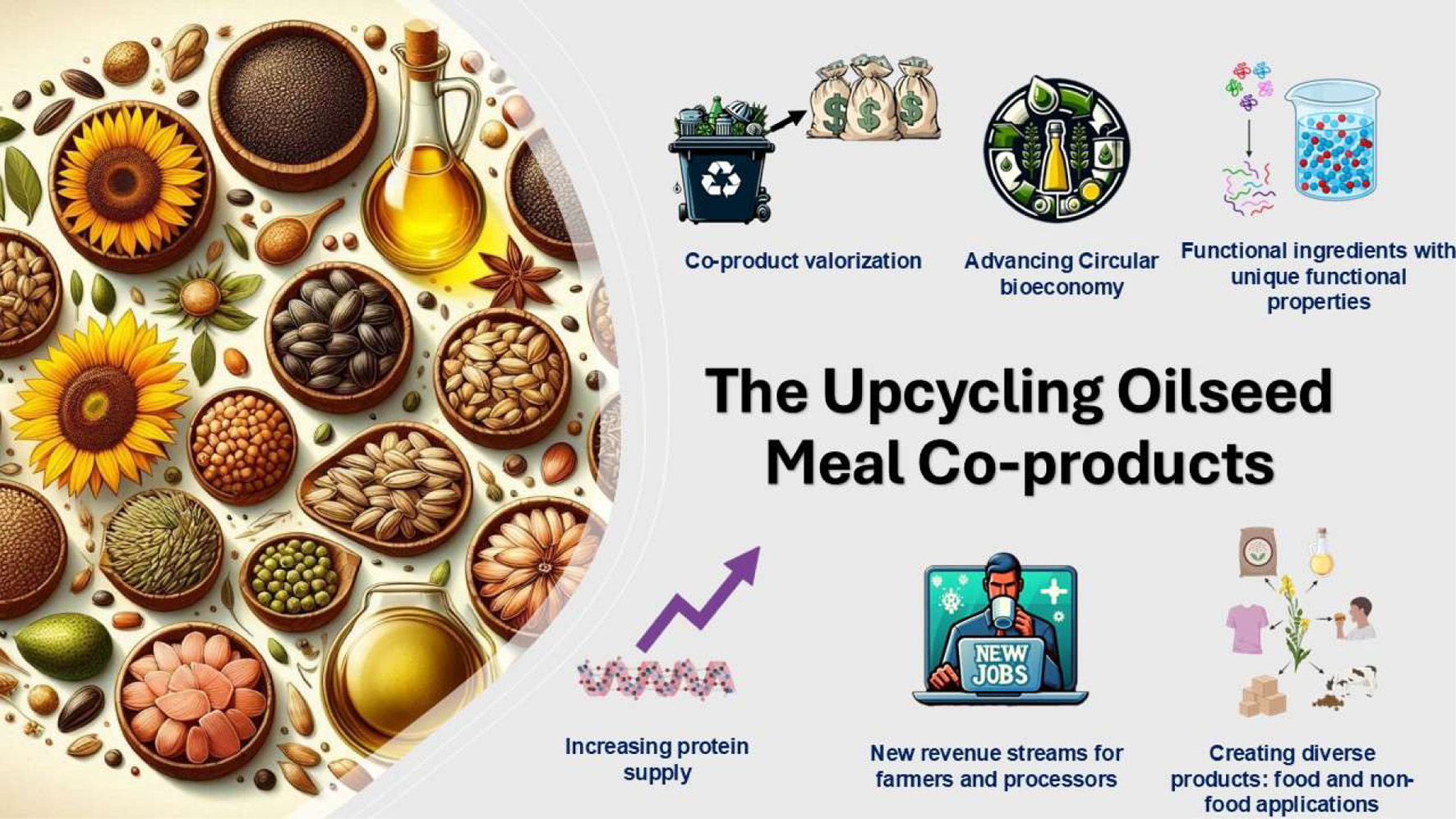 Click for large image | Figure 3. Upcycling oilseed meal coproducts for diversifying the oilseed industry. |
Due to their high protein content and distinctive amino acid profiles, oilseed meals are promising precursors for amino acid production in cellular agriculture applications. Protein hydrolysis, achieved through chemical or enzymatic methods, can convert intact proteins into free amino acids that are more readily utilized in cell culture systems. Enzymatic hydrolysis using proteases such as alcalase and trypsin has been widely investigated for its ability to generate high-quality amino acids while minimizing structural degradation (Mora and Toldrá, 2023). In contrast, chemical hydrolysis approaches are generally more cost-effective and easier to scale; however, alkaline and acid treatments, while efficient, can degrade amino acids and therefore require careful process optimization to retain essential nutrients. Following hydrolysis, purification is necessary to remove residual impurities and ensure compatibility with cellular agriculture applications. Membrane filtration offers a scalable and cost-effective strategy for separating hydrolyzed proteins and amino acids based on molecular weight (Sentís-Moré et al., 2022). Finally, to verify their suitability for use in cell culture media, the recovered amino acids must be characterized for composition, solubility, and stability under bioreactor-relevant conditions.
Upcycling oilseed proteins, particularly canola protein, for packaging applications has gained increasing attention as a sustainable alternative to petroleum-based materials. Canola protein can be processed into biodegradable films and coatings with promising barrier and mechanical properties suitable for food packaging applications (Bandara et al., 2018; Cháirez-Jiménez et al., 2024; Dissanayake et al., 2022, 2023). Although native canola proteins often exhibit limited functionality due to denaturation during oil extraction, targeted modification strategies such as heat treatment, pH adjustment, plasticization, and enzymatic crosslinking have been shown to improve film-forming ability, flexibility, and water resistance (Dissanayake et al., 2023). The valorization of canola meal into protein-based packaging materials not only reduces waste and adds economic value to oilseed processing streams but also aligns with circular economy principles by enabling renewable, biodegradable packaging solutions (Dissanayake et al., 2022). Upcycling oilseed coproducts faces several technical, economic, and market barriers that have limited commercial success. The variable composition, the presence of anti-nutritional compounds, and the requirement for costly processing to extract functional components at scale (Zareie et al., 2025). Although research demonstrates strong potential, the gap between lab-scale feasibility and industrial-scale profitability remains the primary challange to widespread commercialization.
2.4. Fermentation: effective technology for upcycling of food coproducts
The increase in the global food production has been accompanied by significant food losses and waste. In most cases, food waste is edible and contains essential nutrients such as carbohydrates, proteins, and lipids, together with characteristic bioactive compounds like dietary fibers, vitamins, enzymes, polyphenols, and carotenoids, among others. Therefore, the development of technologies for the re-use of the waste as food materials, especially, as functional food ingredients, has become imperative not only due to the environmental viewpoint but to the increasing pressure on future food shortage driven by the inevitable rise in the world population. These technologies are generally required to be simple, easy, low cost, low energy consumption, eco-friendly, and sustainable. From this upcycling viewpoint, fermentation has great potential to convert the wastes into value-added food ingredients. Moreover, the fermentation process can potentially improve the bioavailability of bioactive compounds, reduce anti-nutritional factors and enhance the sensory characteristics.
There have been numerous reviews published on the upcycling of cereal, vegetable, fruit, dairy products, and meat by using fermentation (Foti et al., 2025; Garrido-Galand et al., 2021; Marcelli et al., 2025). Especially, significant losses and wastes are found in fruit and vegetable sectors. A huge amount of coproduct, sometimes more than 50% of the raw material, is discarded mainly from the fresh produce trade and the processing industry of agricultural products. The waste includes edible parts rich in bioactive compounds such as polyphenols, carotenoids, dietary fibers, vitamins, and enzymes. Current practices for recovery of fruit and vegetable coproducts may contribute to a circular economy but are often limited mainly by high operational costs. In this context, fermentation has emerged as a promising, sustainable approach for converting these coproducts into value-added food ingredients.
In addition to the terrestrial biomass resources, the interest has also been paid to marine coproducts. Recently, fish industry has been growing continuously and generates huge amounts of coproducts such as head, skin, bones, thorns, and viscera. Fermentation of fish coproducts can increase not only the shelf-life but the nutritional values with the formation of functional protein hydrolysates and umami flavor compounds (Marti-Quijal et al., 2020). Seaweed coproducts can also be an important marine resource for fermentation (Monteiro et al., 2021). Seaweeds are rich in nutrients including dietary fibers, essential minerals, and proteins with a high amino acid score. In addition to these basic nutrients, the phenomenal biodiversity of the marine environment provides a large pool of novel and bioactive phytochemicals for seaweeds. However, acceptance of seaweed in world markets remains limited because of sensory attributes such as pronounced marine odors, bitterness, and fibrous texture. For the improvement of these sensory characteristics, fermentation has been regarded as effective technology.
Fermentation procedure may bring out the deliciousness from seaweeds. Japanese researchers have reported the development of sauce from seaweed coproducts, discolored nori (Pyropia yezoensis), by fermentation using novel halophilic lactic acid bacteria. The sensory characteristics of nori sauce was comparable to those of soy and fish sauces and showed a high nutritional value (Uchida et al., 2018) (Figure 4).
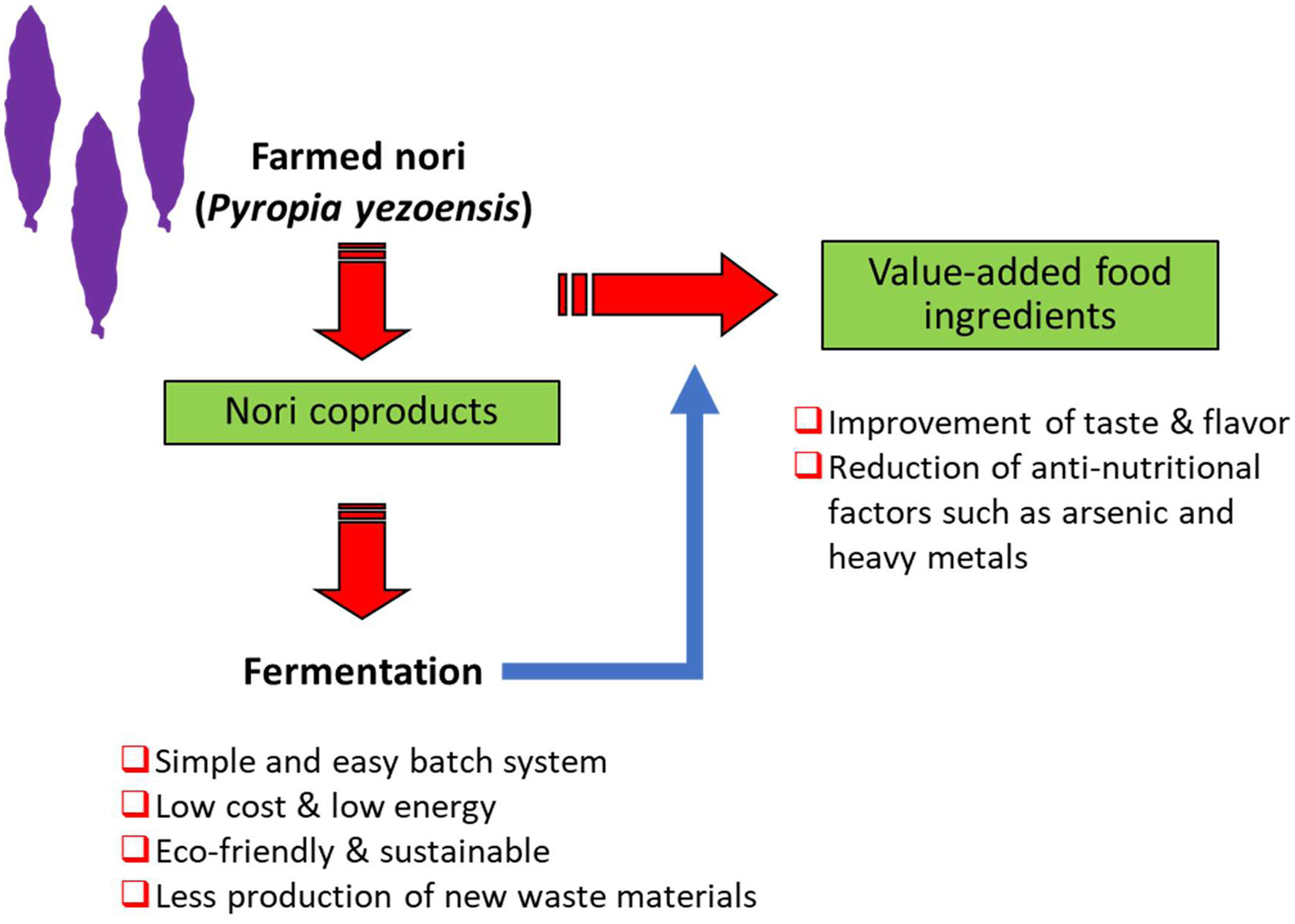 Click for large image | Figure 4. Fermentation of seaweed (farmed nori) coproducts and their value-added food ingredients. |
2.5. Seafood coproduct valorization for sustainable lobster and snow crab bait development
Lobster and snow crab represent two of the most economically valuable crustacean resources in the North Atlantic. Together, they account for a substantial proportion of Canada’s seafood export value and underpin the livelihoods of many coastal communities (Gordon, 2021). Beyond harvest regulations and stock management, however, the sustainability of these fisheries is closely tied to bait use. Trap fisheries traditionally depend on large quantities of forage fish - primarily herring, mackerel, sardine, and squid - to attract target species. Annual bait demand in Atlantic Canada alone has been estimated in the tens of thousands of metric tons, rivalling or exceeding the landings of some forage fish stocks. From a food-system perspective, this practice raises several concerns. Forage fish are nutritionally rich, suitable for direct human consumption and aquaculture feed, and play a pivotal ecological role as prey for higher trophic-level species (Venugopal, 2019). Diverting them to bait creates trophic inefficiencies and amplifies ecosystem pressure. Rising prices, seasonal shortages, and increasing scrutiny of forage fish exploitation have, therefore, intensified interest in alternative bait strategies that are effective, affordable, and environmentally responsible (Araya-Schmidt et al., 2019).
Crustaceans rely strongly on chemoreception to locate food. Water-soluble compounds released from bait form chemical plumes that stimulate exploratory and feeding behaviors. Research has identified free amino acids (e.g., glycine, alanine, and taurine), small peptides, nucleotides, and certain lipid-derived volatiles as key attractants. Traditional forage fish baits are effective largely because they release complex mixtures of these compounds during degradation (Derby et al., 2016). Understanding this molecular basis provides the foundation for alternative bait development. Rather than relying on whole fish, targeted extraction or concentration of bioactive fractions from seafood coproducts can reproduce attraction cues while reducing waste and dependency on wild bait species.
Seafood processing generates large volumes of coproducts, including heads, frames, viscera, skin, and trimmings. Historically underutilized, these materials are rich in proteins, lipids, and low-molecular-weight compounds relevant to crustacean attraction. Fish silage, enzymatic hydrolysates, and blended coproduct pastes have all been investigated as bait bases, with several studies reporting catch rates comparable to traditional bait (Masilan and Neethiselvan, 2018). In parallel, synthetic and semi-synthetic baits have been developed to decouple bait supply from wild fish stocks. These systems often combine selected attractants with controlled-release matrices to regulate leaching rates and extend soak time. Hybrid approaches, integrating natural coproduct extracts into engineered carriers, represent a promising middle ground by balancing biological realism with consistency and scalability (Table 2).
Click to view | Table 2. Representative categories of alternative lobster and snow crab baits reported in the literature |
Bait serves not only as an attractant for lobsters and snow crabs, but also as a supplementary feed source within benthic fishing grounds. Consequently, it can influence their nutritional intake, metabolic status, and physiological condition. Studies have shown that prolonged exposure to bait-subsidized diets may alter lipid composition and reproductive parameters in ovigerous lobsters (Goldstein and Shields, 2018). Consequently, alternative bait systems should be evaluated not only for catch efficiency but also for potential long-term ecological effects. Field trials across regions indicate that performance of alternative baits is context-dependent, influenced by temperature, currents, soak time, and fisher practices. Blended formulations and controlled-release systems generally outperform single-ingredient substitutes, emphasizing the importance of formulation science and iterative testing (Dellinger et al, 2016).
Progress toward sustainable bait systems will require coordinated advances in several areas: (i) identification of key bioactive attractants and their synergistic effects; (ii) development of biodegradable, controlled-release matrices suitable for diverse fishing conditions; (iii) assessment of nutritional and ecological impacts of long-term bait substitution; and (iv) scaling coproduct valorization within regional seafood processing infrastructures. Equally important are socioeconomic factors, including fisher acceptance, cost competitiveness, and regulatory alignment (Tan et al., 2025).
In conclusion, reducing reliance on forage fish bait is both an environmental necessity and an opportunity for innovation. Valorization of seafood coproducts, informed by food chemistry and sensory biology, offers a viable pathway toward effective and sustainable lobster and snow crab baits. Continued interdisciplinary collaboration among scientists, industry, and fishers will be essential to translate these concepts into widespread commercial practice.
| 3. Conclusion | ▴Top |
The upcycling of food processing coproducts represents a transformative strategy for achieving a sustainable, circular bioeconomy. As highlighted, agricultural, oilseed, and marine residues are valuable reservoirs of proteins, bioactives, and fibers rather than mere waste. Utilizing innovative technologies, such as fermentation and green extraction, allows these resources to be converted into functional ingredients, nutraceuticals, biodegradable packaging, and alternative feeds. Future endeavors must focus on scaling these processes and fostering interdisciplinary collaboration to optimize commercial viability. Ultimately, embracing zero-waste processing is imperative for enhancing global food security and minimizing environmental impact.
Acknowledgments
This review was produced from a scientific roundtable discussion held by the International Academy of Food Science and Technology (IAFoST) on December 10, 2025. We thank Judith Meech (IUFoST Secretary-General) for her great support in assisting with the organization of this event. In addition, we would like to thank Joanne Toy Yi Hui from the National University of Singapore (NUS) for her contribution to the section “Sustainable agriceuticals: reclaiming protein and phytochemicals from coproducts of agricultural and food industry”.
Ethic statement
This review did not involve any ethical issues.
Conflict of interest
The authors declare that they have no conflict of interest.
| References | ▴Top |