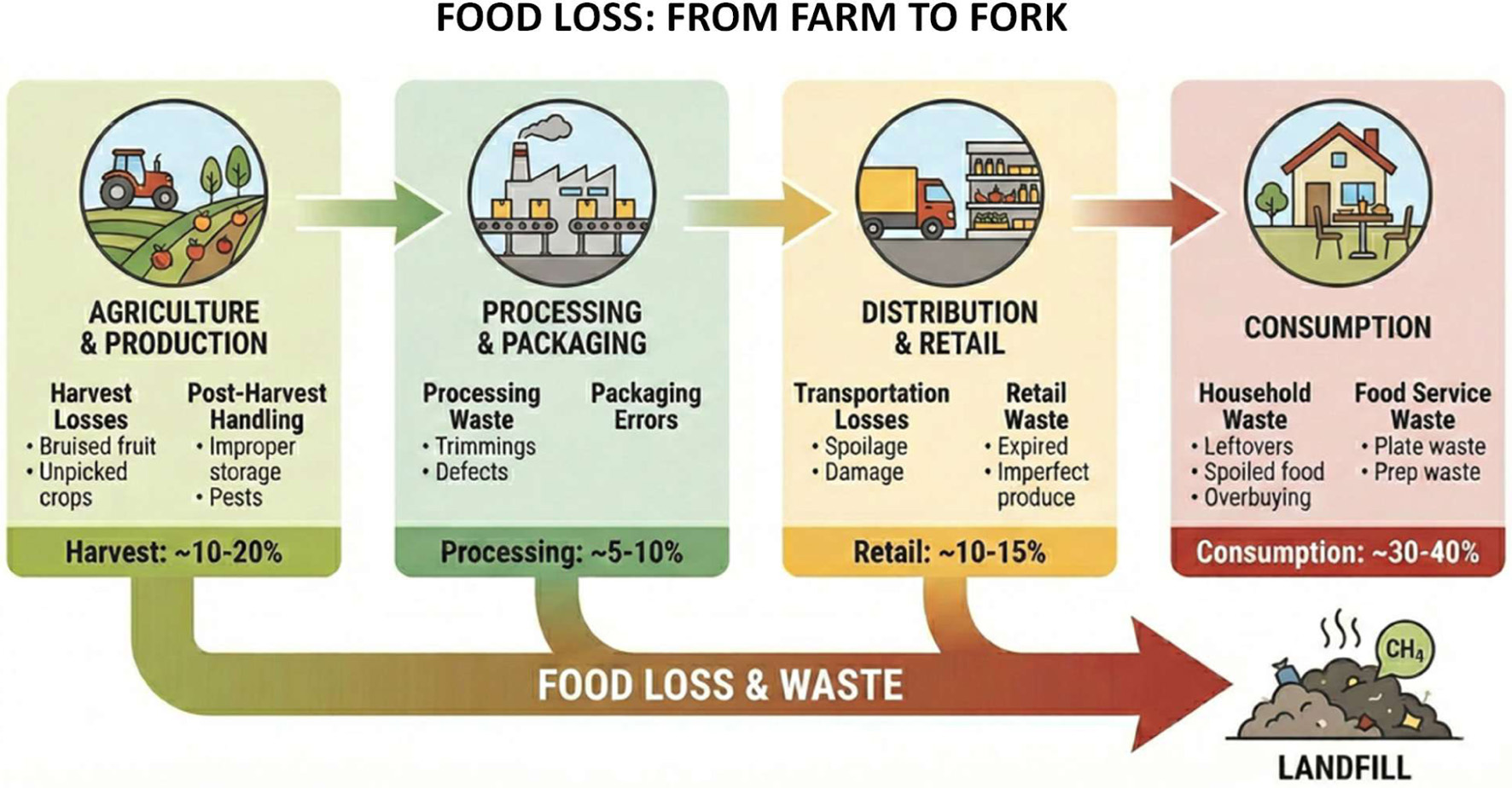
Figure 1. Percentage of food loss from farm to fork. Source: Data compiled from FAO (2011) and Food Waste Index Report (2024).
| Journal of Food Bioactives, ISSN 2637-8752 print, 2637-8779 online |
| Journal website www.isnff-jfb.com |
Review
Volume 33, March 2026, pages 1-9
Upcycling for a sustainable food future: turning waste into high-value products for nutrition and health
Figures
Tables
| Compound | Juice | Skin | Seed |
|---|---|---|---|
| Abbreviation: tr, trace. Source: The type (s) of grape used in wine and juice production is unspecified. | |||
| Hydroxycinnamates | 40–460 | – | – |
| Flavonoids | – | 20–95 | – |
| Anthocyanins | – | 200–500 | – |
| Flavan-3-ols | tr | 14–66 | 50–1,000 |
| Proanthocyanidins (oligomeric) | tr | 35–200 | 120–1,400 |
| Proanthocyanidins (polymeric) | – | 20–750 | 1,250–1,700 |
| Resveratrol | 0.2–9.1 | 15–100 | 5–10 |
| Bait category | Raw material source | Key advantages | Main limitations |
|---|---|---|---|
| Natural substitutes | Underutilized fish, seal fat, and poultry waste | Locally available and low cost | Variable performance and perishability |
| Coproduct-based | Fish silage, hydrolysates, and trimmings | Circular economy and reduced waste | Requires processing and formulation |
| Synthetic/hybrid | Defined attractants + matrices | Consistent and stable supply | Higher R&D and production costs and efficacy concerns |