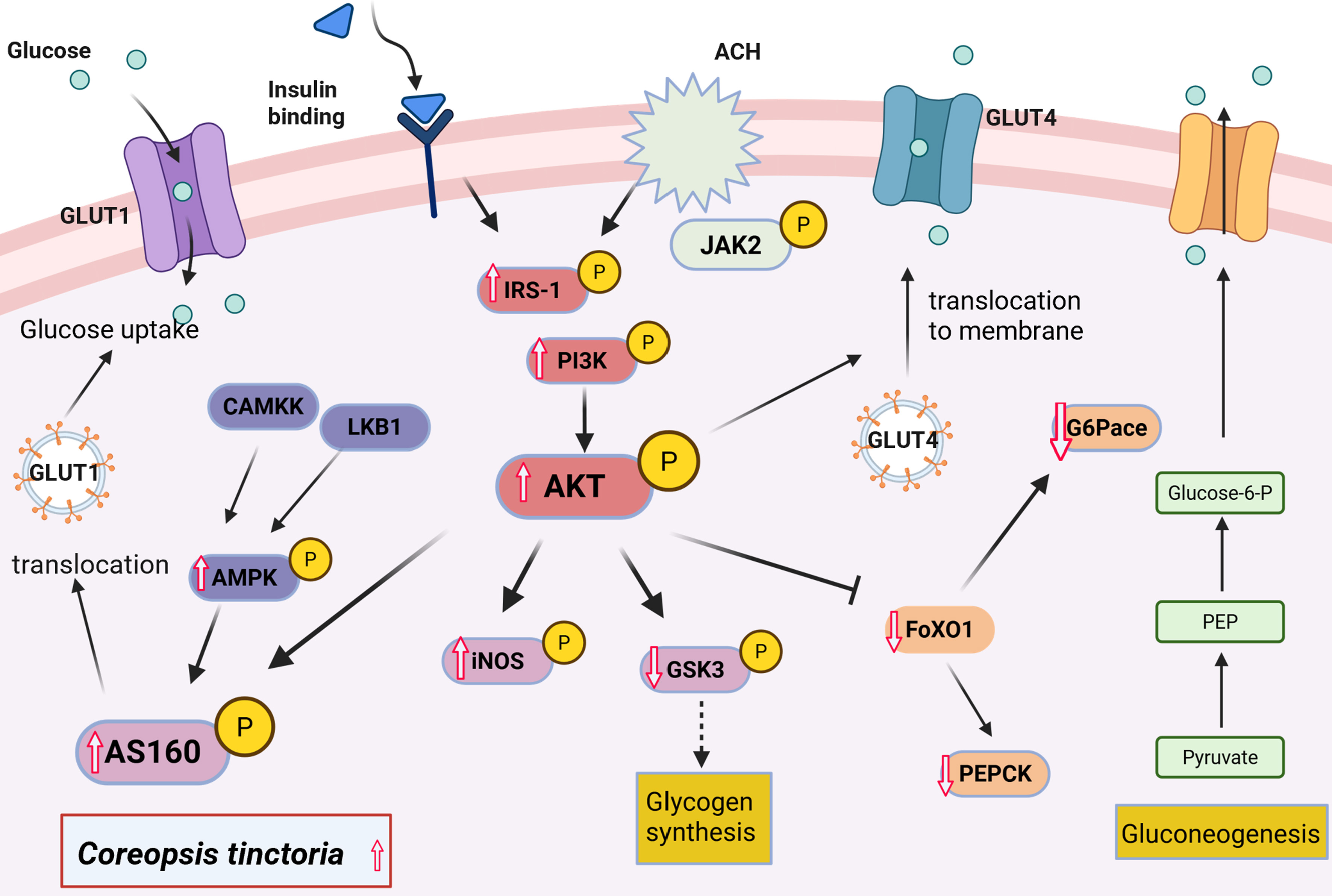
Figure 1. The possible molecular mechanisms of Coreopsis tinctoria leading to an improved diabetic insulin resistance.
| Journal of Food Bioactives, ISSN 2637-8752 print, 2637-8779 online |
| Journal website www.isnff-jfb.com |
Review
Volume 35, September 2026, pages 24-37
Coreopsis tinctoria and its bioactives in the prevention and management of diabetes and diabetic complications
Figure
Tables
| Biological activity | C. tinctoria and its components | Dosage | Cell/Animal model | Dosing method/Timing | Mechanism of action |
|---|---|---|---|---|---|
| Antioxidant and anti-inflammatory | Marein | 5 μmol/L | H2O2-treated HepG2 cells | Incubation with compounds for 24 h | Reduced levels of MDA, ROS, and LDH; increased SOD and GSH-Px activities; restored SIRT1 and Nrf2 levels decreased expression of inflammatory factors VEGF, ICAM-1, and MCP-1 (Zhao et al., 2025a) |
| Marein | 10, 25, 50 μmol/L | Chondrocytes | Incubation with compounds for 24 h | Enhanced Nrf2 phosphorylation, induced HO-1 and NQO1 expression, inhibited NO synthesis, suppressed activation of NF-κB pathway (Yin et al., 2025) | |
| C. tinctoria extract | 100, 200, 400 µg/g | Wistar rats | Gavage for 4 weeks | Reduced blood glucose and MDA levels; increased SOD and GSH-Px activities in diabetic rats (Shu et al., 2017) | |
| Water, methanol, and ethanol extracts of C. tinctoria | 0.2 g/kg | Wistar rats | Gavage for 4 weeks | Increased serum GS, SOD, IND, and CP levels; reduced MDA levels (Zhang et al., 2017) | |
| C. tinctoria extract | 1, 2, 4 g/kg | Kunming mice | Gavage for 14 d | Increased SOD activity; decreased MDA levels (Huangfu et al., 2024) | |
| n-Butanol extract of C. tinctoria | 200, 400, 600 mg/kg bw | T2DM mice | Gavage for 28 d | Increased CAT, GSH, GSH-Px, and SOD activities (Zhang et al., 2019) | |
| Improvement of glucose and lipid metabolism disorders | Marein | 5, 10, 20, 40 μmol/L | HepG2 cells | Incubation for 24 h | Promoted glucose uptake; increased hexokinase activity and glycogen synthesis; reduced PEPCK and G6Pase expression; regulated glucose metabolism pathways (Jiang et al., 2018) |
| Kaempferol | 1.5625, 3.125, 6.25, 12.5, 25, 50, 100 μmol/L | L02 cells | Incubation for 24 h | Improved impaired glucose consumption (Huangfu et al., 2024) | |
| C. tinctoria extract | 0.75, 1.5, 3 g/kg | ICR mice | Gavage for 30 d | Reduced fasting blood glucose and glycated serum protein; decreased serum TC and TG levels (Fan et al., 2013) | |
| C. tinctoria extracts | Ethanol extracts: 0.4, 0.8, 1.6 g/kg; water extracts: 0.3, 0.6, 1.2 g/kg | SD rats | Gavage for 4 weeks | Reduced levels of HbA1c, TG, TC, and LDL-C; increased HDL-C levels (Lan et al., 2014) | |
| Ethyl acetate extract of C. tinctoria | 0.15, 0.3, 0.6 g/kg | SD rats | Gavage for 4 weeks | Reduced levels of blood glucose, HbA1c, TG, and LDL (Zhang et al., 2015) | |
| Water extract of C. tinctoria | 4 g/kg | DIO mice | Gavage for 8 weeks | Improved glucose tolerance and metabolism, reduced HbA1c levels, restored gut microbiota balance (Zhang et al, 2022) | |
| Kunlun snow chrysanthemum water extract | 0.1, 0.2, 0.4 g/kg | KKAy mice | Gavage for 35 d | Increased adiponectin, resistin, and HDL-C levels; decreased TC, TG, and LDL-C levels (Wu et al., 2017) | |
| Improvement of insulin resistance | Marein and C. tinctoria polysaccharides | Marein: 100, 200, 400 μmol/L; polysaccharides: 25, 50, 100, 200 μg/mL | MIN6 cells | Incubation for 24 h | Increased cell proliferation and insulin secretion; decreased Bax expression; increased Bcl-2 expression (Liu et al., 2017) |
| Ethanol and water extracts of C. tinctoria | Ethanol extract: 0.4, 0.8, 1.6 g/kg; water extract: 0.3, 0.6, 1.2 g/kg | SD rats | Gavage for 4 weeks | Reduced levels of fasting blood glucose and serum insulin; increased insulin sensitivity index (Lan et al., 2014) | |
| Water extract of C. tinctoria | 0.1, 0.2, 0.4 g/kg | KKAy mice | Gavage for 5 weeks | Reduced fasting blood glucose and serum insulin levels; improved insulin sensitivity (Zhang et al., 2016) | |
| Kunlun snow chrysanthemum extract | 100, 200, 400 μg/g | Wistar rats | Gavage for 4 weeks | Reduced fasting and 2-h postprandial blood glucose; promoted insulin secretion; protected pancreatic β-cells (Shu et al., 2017a) | |
| Ethyl acetate extract of C. tinctoria | 150, 300, 600 mg/kg | SD rats | Gavage for 8 weeks | Reduced blood glucose and insulin levels; increased insulin sensitivity index; improved insulin tolerance (Jiang et al., 2018) | |
| Water and ethanol extracts of C. tinctoria | 4, 10 g/kg bw | C57BL/6J mice | Gavage for 8 weeks | Increased serum insulin levels; improved glucose tolerance and insulin tolerance (Huangfu et al., 2024) | |
| Regulation of enzymes and gene/protein expression | Marein | 5, 10 μmol/L | HepG2 cells | Incubation for 24 h | Promoted glucose uptake via CaMKK/AMPK/GLUT1; increased glycogen synthesis via IRS/Akt/GSK-3β; reduced gluconeogenesis via Akt/FoxO1, improved insulin resistence in HepG2 cells induced by high glucose (Jiang et al, 2016a) |
| Active fractions of C. tinctoria | 6.25, 12.5, 25, 50 μg/mL | HUVEC cells | Incubation for 24 h | Upreguated IRS-1, Akt, and eNOS expression; increased phosphorylation levels; improved endothelial function via JAK2/IRS-1/PI3K/Akt/eNOS pathway (Li et al., 2020) | |
| Kunlun snow chrysanthemum extract | 100, 200, 400 mg/kg | Wistar rats | Gavage for 4 weeks | Improved insulin resistance through IRS-1/PI3K/GLUT4 signaling pathway (Shu et al., 2017b) | |
| C. tinctoria extract | 150, 300 mg/kg/d | C57BL/6J mice | Gavage for 8 weeks | Suppressed hepatic inflammation via NF-κB/iNOS/COX-2/NLRP3/MAPK; improved oxidative stress via Nrf2/HO-1 pathway (Abdurehman et al., 2023) | |
| Improvement of mitochondrial dysfunction | C. tinctoria extract | 200, 400 mg/kg bw | db/db mice | Gavage for 15 weeks | Regulated mitochondrial electron transport chain and TCA cycle; affected 48.2% of dysregulated genes in db/db mice (Ma et al., 2023) |
| Autophagy regulation | Marein | 50 mg/kg | db/db mice | Gavage for 8 weeks | Improved liver and pancreas morphology; decreased P62 expression; increased LC3II/I, Beclin1, and ATG5 expression (Zhang et al., 2024) |
| Autophagy regulation | Marein | 50 mg/kg | db/db mice | Gavage for 8 weeks | Upregulated PI3K/Akt phosphorylation, LC3-II/I, Beclin1, ATG5, and renal FGFR1 expression; increased serum FGF21 and FGF23 levels (Li et al., 2021) |
| Biological activity | C. tinctoria and its components | Dosage | Cell/animal model | Dosing method/Timing | Mechanism of action |
|---|---|---|---|---|---|
| Diabetic nephropathy | Ethyl acetate extract of C. tinctoria | 25, 50, 100, 150 mg/L | HBZY-1 cells | Incubation for 24 h | Inhibited proliferation of rat glomerular mesangial cells induced by high glucose and reduced mRNA and protein expression of TGF-β1 and collagen IV (Yao et al., 2017) |
| C. tinctoria flavonoids | 25, 50, 100 μg/mL | HBZY-1 cells | Incubation for 24 h | Suppressed mesangial fibrosis by regulating the TGF-β1/Smads/Nox4 signaling pathway and reduced fibronectin and α-SMA expression (Zhang et al., 2018) | |
| Flavanomarein | 1, 10, 20, 40, 60, 80 μmol/L | HK-2 cells | Culture for 24 h | Inhibited epithelial–mesenchymal transition (EMT) by decreasing α-SMA, fibronectin, and vimentin expression through inhibition of the Syk/TGF-β1/Smad pathway (Zhang et al., 2020) | |
| Marein | 66 μmol/L | HK-2 cells | Culture for 6 h | Inhibitd SGLT2 expression and reduced glucose analogue uptake; increased p-AMPK/pACC to ameliorate high-glucose-induced cellular dysfunction (Guo et al., 2020) | |
| Marein | 3, 10 μmol/L | HRGEC cells | Culture for 24 h | Increased PI3K and p-AKT (Ser473)/AKT and LC3 protein levels while decreasing p62 expression (Li et al., 2022) | |
| Ethyl acetate extract of C. tinctoria | 150, 300, 600 mg/kg | SD rats | Gavage for 4 weeks | Reduced expression of pro-inflammatory cytokines MCP-1 and ICAM-1; decreased fibronectin and collagen IV and inhibitd the TGF-β1/Smad pathway to alleviate renal hypertrophy and fibrosis (Yao et al., 2015) | |
| Ethyl acetate extract | 300 mg/kg | SD rats | Gavage for 4 weeks | Alleviated renal tubular dilation, glomerular shrinkage, inflammatory cell infiltration, and basement membrane thickening; decreased renal Vimentin, α-SMA, TGF-β1, and p-Smad2 expression (Jiang et al., 2019) | |
| Ethanol extract | 300 mg/kg | db/db mice | Gavage for 10 weeks | Reduced 24-h urinary albumin excretion and renal injury; down-regulated miR-192 and miR-200b while increased ZEB2 expression, thereby modulating the PTEN/PI3K/AKT pathway to attenuate renal fibrosis (Yu et al., 2019) | |
| Ethyl acetate extract | 150, 300, 600 mg/kg | SD rats | Gavage for 4 weeks | Suppressed α-SMA expression and renal fibrotic deposition via the RhoA/ROCK/Nox4 signaling pathway, thereby attenuating early renal injury (Yao et al., 2019) | |
| Marein | 50 mg/kg/day | db/db mice | Gavage for 12 weeks | Inhibitd SGLT2 expression, activated AMPK/ACC/PGC-1α signaling, and suppressed IL-6, MCP-1, FN, and COL1 expression (Guo et al., 2020) | |
| Marein | 50 mg/kg | db/db mice | Gavage for 12 weeks | Improved glomerular and tubular basement membrane thickening, glomerulosclerosis, and tubular fibrosis by regulating the PI3K/Akt signaling pathway and improved insulin resistance (Song et al., 2023) | |
| Marein | 50 mg/kg | db/db mice | Gavage for 8 weeks | Reduced fibronectin, vimentin, TGF-β, and FGFR1 expression while increasing CD31 expression (Zhang et al., 2023) | |
| Diabetic cardiomyopathy | Marein | 25, 50, 100 mg/kg | isoproterenol-stimulated mice | Gavage for 8 weeks | Reduced the protein expression levels of α-smooth muscle actin, collagen type I, and collagen type III; decreased the protein levels of TGF-β1, HIF-1α, p-Smad2/3, and total Smad2/3. (Niu et al., 2024) |
| Marein | 50 mg/kg | db/db mice | Gavage for 8 weeks | Improved myocardial hypertrophy, reduced collagen fiber deposition, and decreased expression of FN1, vimentin, and TGF-β1 in myocardial tissue (Tian et al., 2024) | |
| Diabetic retinopathy | Active fraction of C. tinctoria | 150, 300 mg/kg | db/db | Gavage for 10 weeks | Attenuates oxidative stress, down-regulates VEGF and ICAM-1, and increased Bcl-2 expression, and up-regulates LC3 and Bcl-2 in high-glucose-treated HUVEC cells (Li et al., 2021) |
| Marein | 50, 100, 200 μmol/L | HRMEC cells (CP-H130) | Incubation | Reduced apoptosis, Bax and LDH levels, and MDA content, increased Bcl-2 levels, and SOD activity (Jin et al., 2023) | |
| Marein | 50 mg/kg | db/db mice | Gavage for 12 weeks | Lowerd blood glucose, TG, TC, and LDL levels; alleviated pathological retinal changes (retinal edema, cell shrinkage, abnormal nuclear morphology); suppressed expression of VEGF, PI3K, fibrin and spleen tyrosine kinase; increased the of epithelial marker E-cadherin expression (Song et al., 2023) | |
| Diabetic encephalopathy | Marein | 1.25, 2.5, 5, 10, 20, 40 μmol/L | PC12 cells | Drug-containing culture for 24 h | Attenuated MG-induced mitochondrial dysfunction, increased GlO1 activity, p-AMPKα (Thr172), and Bcl-2 expression, and reduced Bax, caspase-3, and ICAD activity (Jiang et al., 2016) |
| Water extract | 500, 2,000 mg/kg | Kunming mice | Gavage for 6 weeks | Reduced oxidative stress, regulated acetylcholine (ACh) levels and acetylcholinesterase (AChE) activity, and improved cholinergic system function (He et al., 2020) | |
| C. tinctoria flavonoids | 50, 100, 200 mg/kg | SHR rats (SPF) | Gavage for 11 weeks | Lowered blood pressure, increased SOD, GSH, CAT, reduced ROS accumulation, suppressed TNF-α, IL-1β, IL-6 and Ang-II, alleviated cognitive impairment and histopathological alterations (Wu et al., 2026) |